Light just painted the trees as I crunched down the dirt road, heading back to the coast after my night camping in the woods. I weaved past sleeping farmsteads and descended into the fishing village of Garibaldi on the north bank of Tillamook Bay. The waterfront is a less-than-organized collection of docks, rail, and gangways. The atmosphere is peaceful. Fog floats across the calm water, swirling and mixing with the young sunlight.
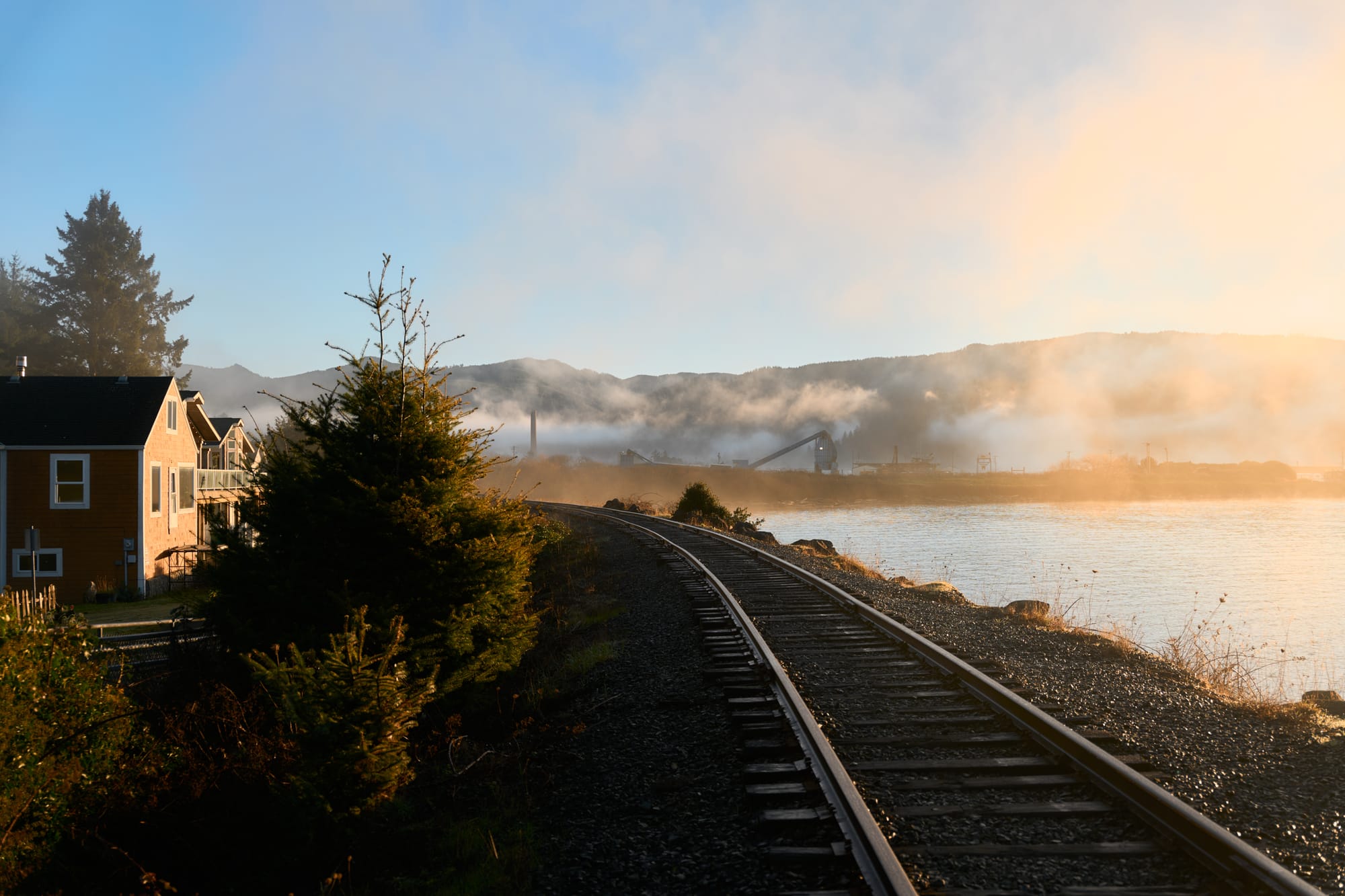
Fog floats across the calm water, swirling and mixing with the young sunlight.
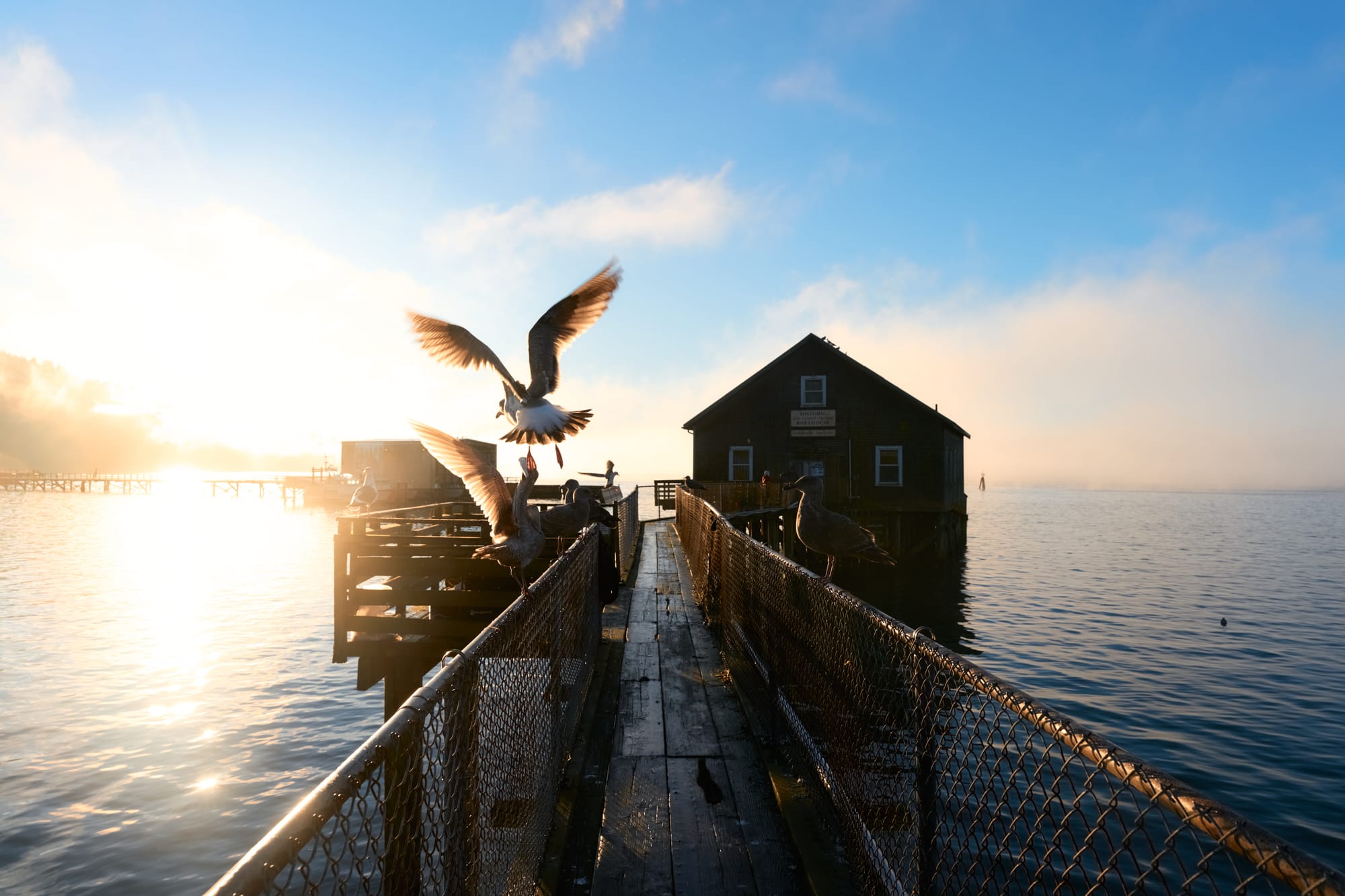
I park in a small gravel lot and walk across the railroad leading out of town. Stretching 700 ft into the bay is a single file pier connected to the old Garibaldi Boat House, which once housed Coast Guard lifeboats. Anglers set up their tackle boxes and buckets in the alcoves along the walk, with a hopeful audience of gulls perched on the railing. They take flight as you approach, the light shining through their wings.
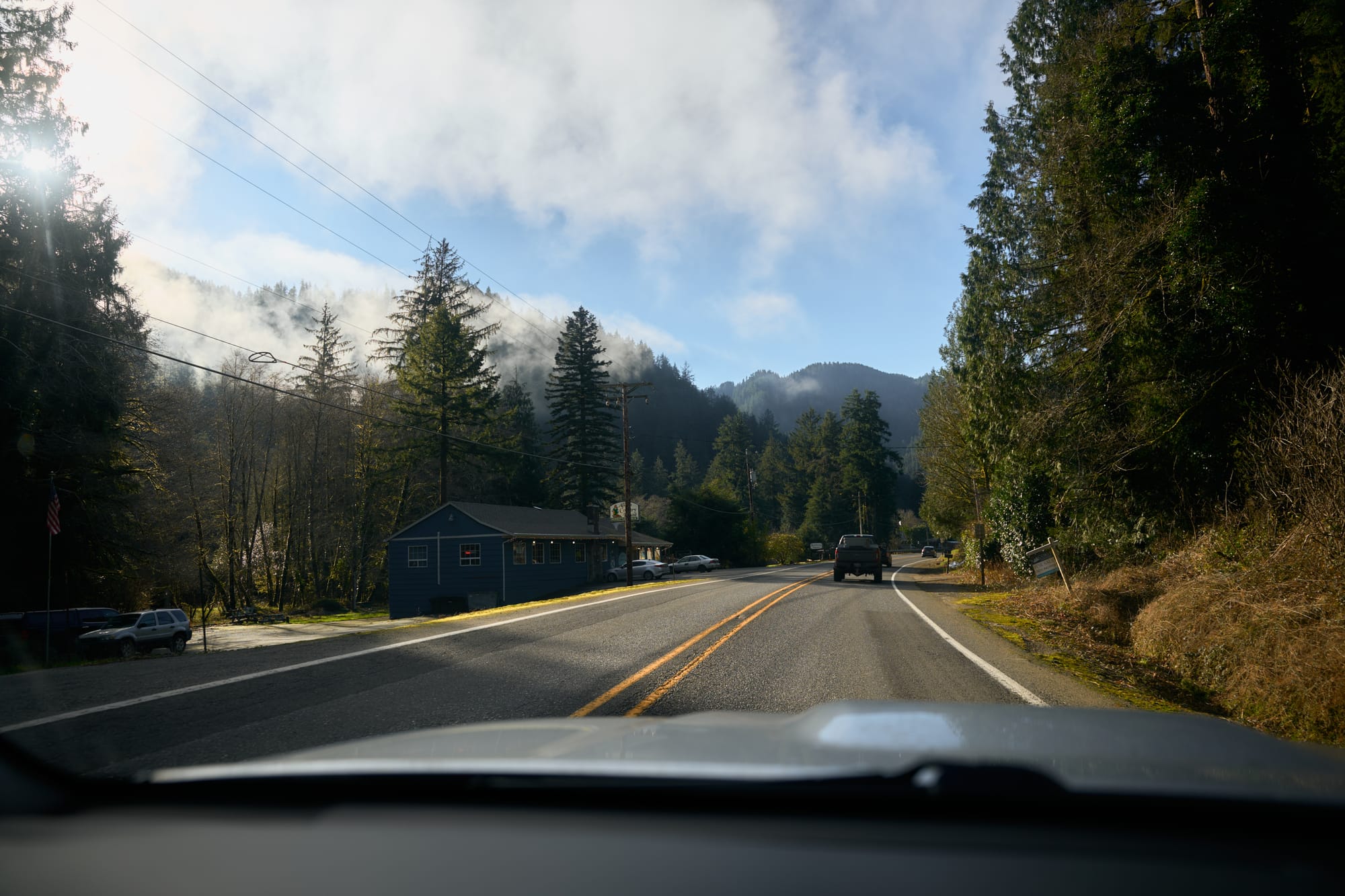
I'm on a scouting mission on the Oregon coast, shooting photos and exploring with a lax agenda. It's a rare sunny stretch in January, but Highway 101 is still running on an off-season tempo. The day before, I left my home in Portland to start my trip just south of Tillamook.
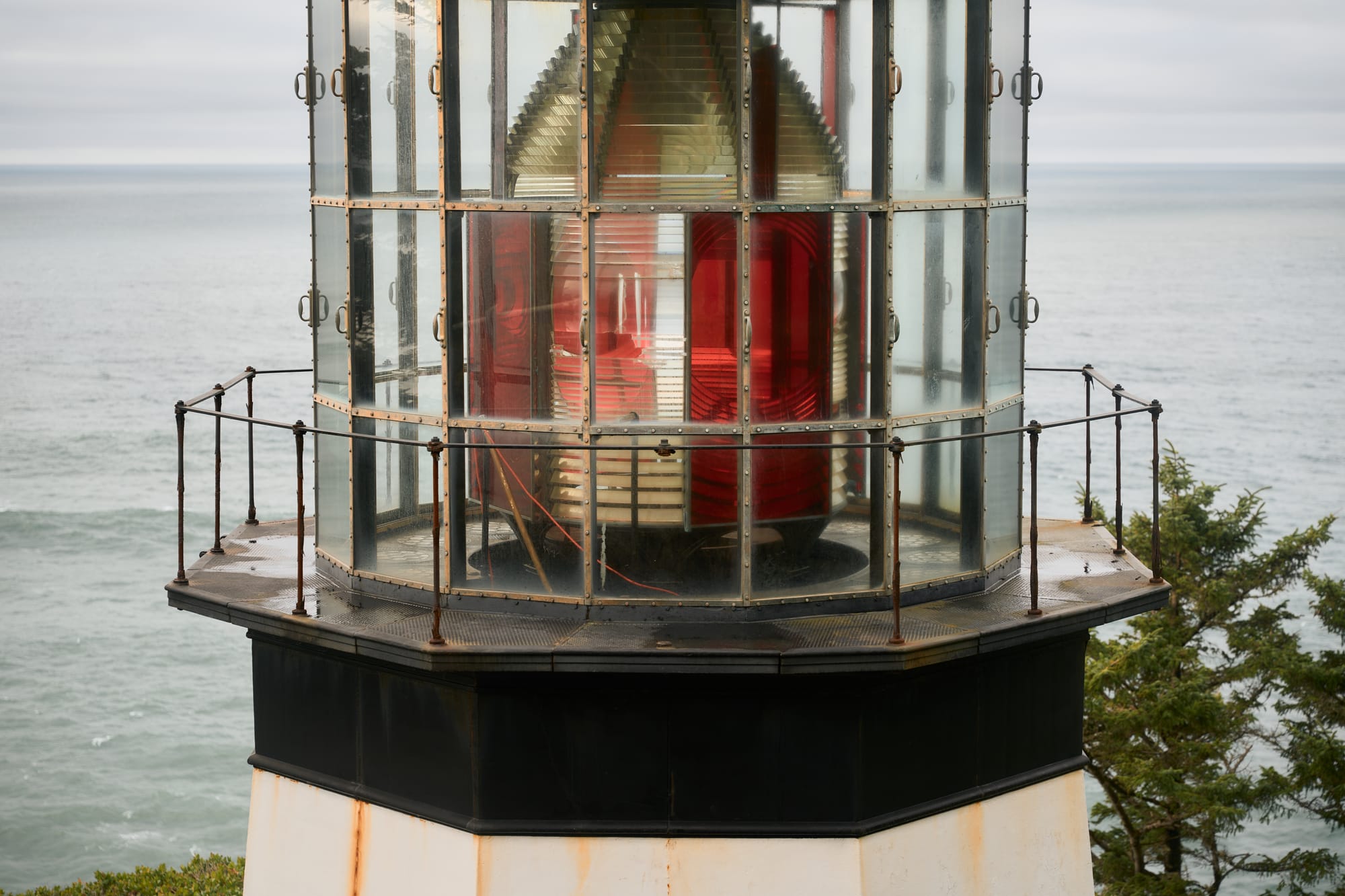
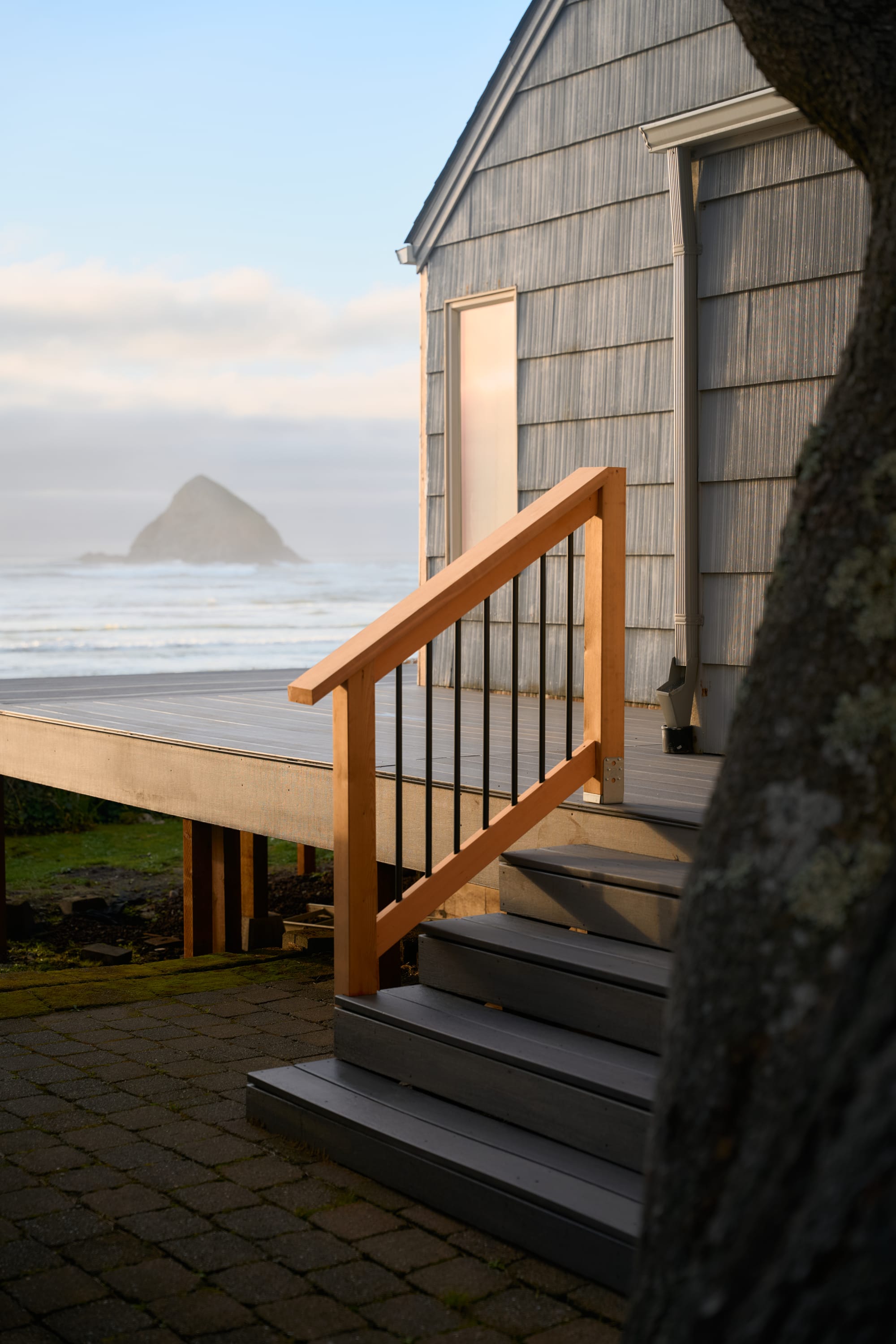
I started at Cape Meares, a headland housing a restored lighthouse with a beautiful red fresnel lens. Nearby is Oceanside, an idyllic village of shingle-clad cottages stacked against the hillside. Here, like many times before in Oregon, friendly folks see my camera and want to chat about birds. I'm more of an dendrophile myself, but I'm starting to succumb to peer pressure. If it ingratiates me with locals I'll learn to talk nuthatches and chickadees. I think the key is being aware of a bird I could see here, like the radical tufted puffin, and setting up that anticipation for spotting one.
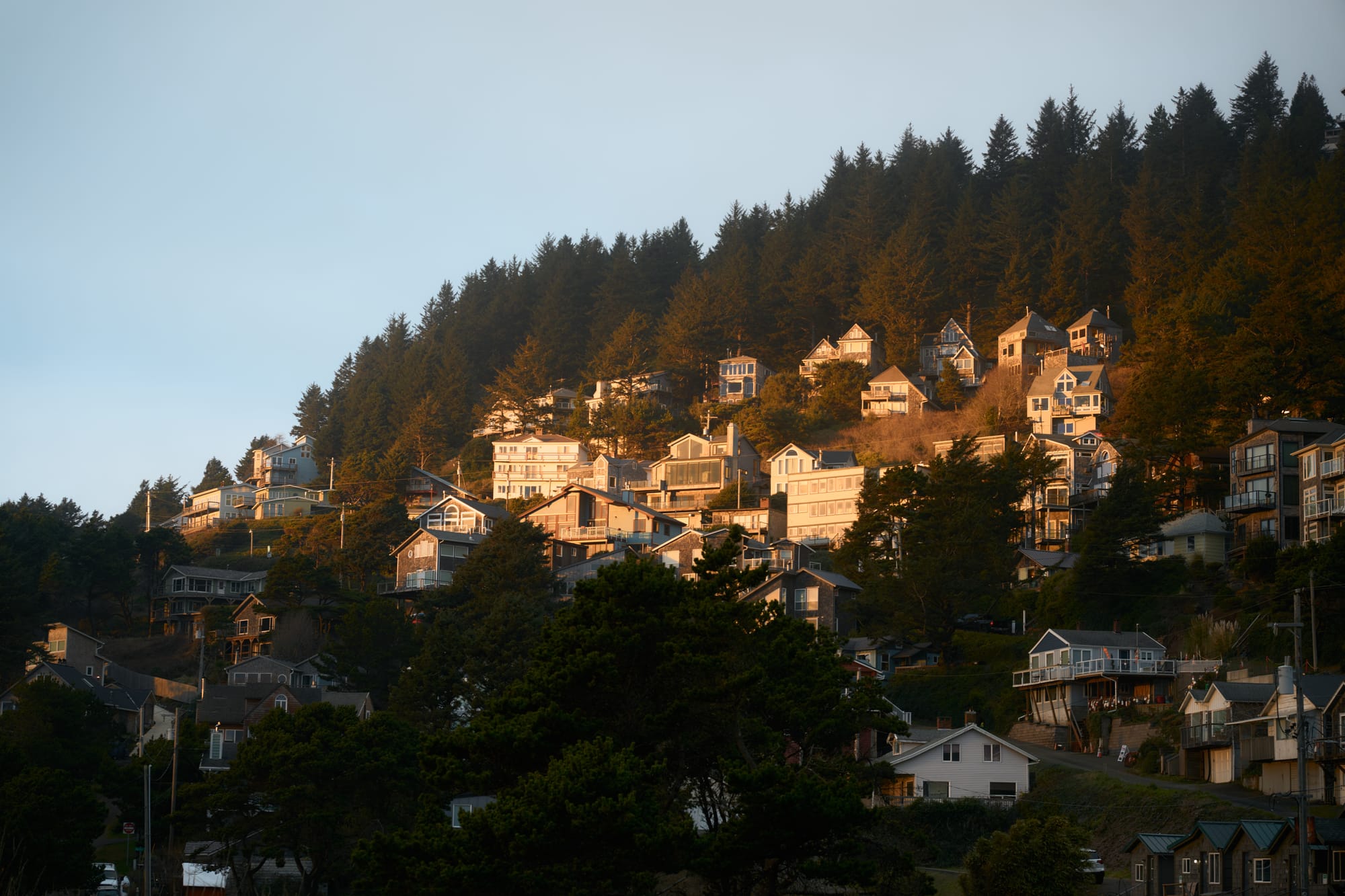
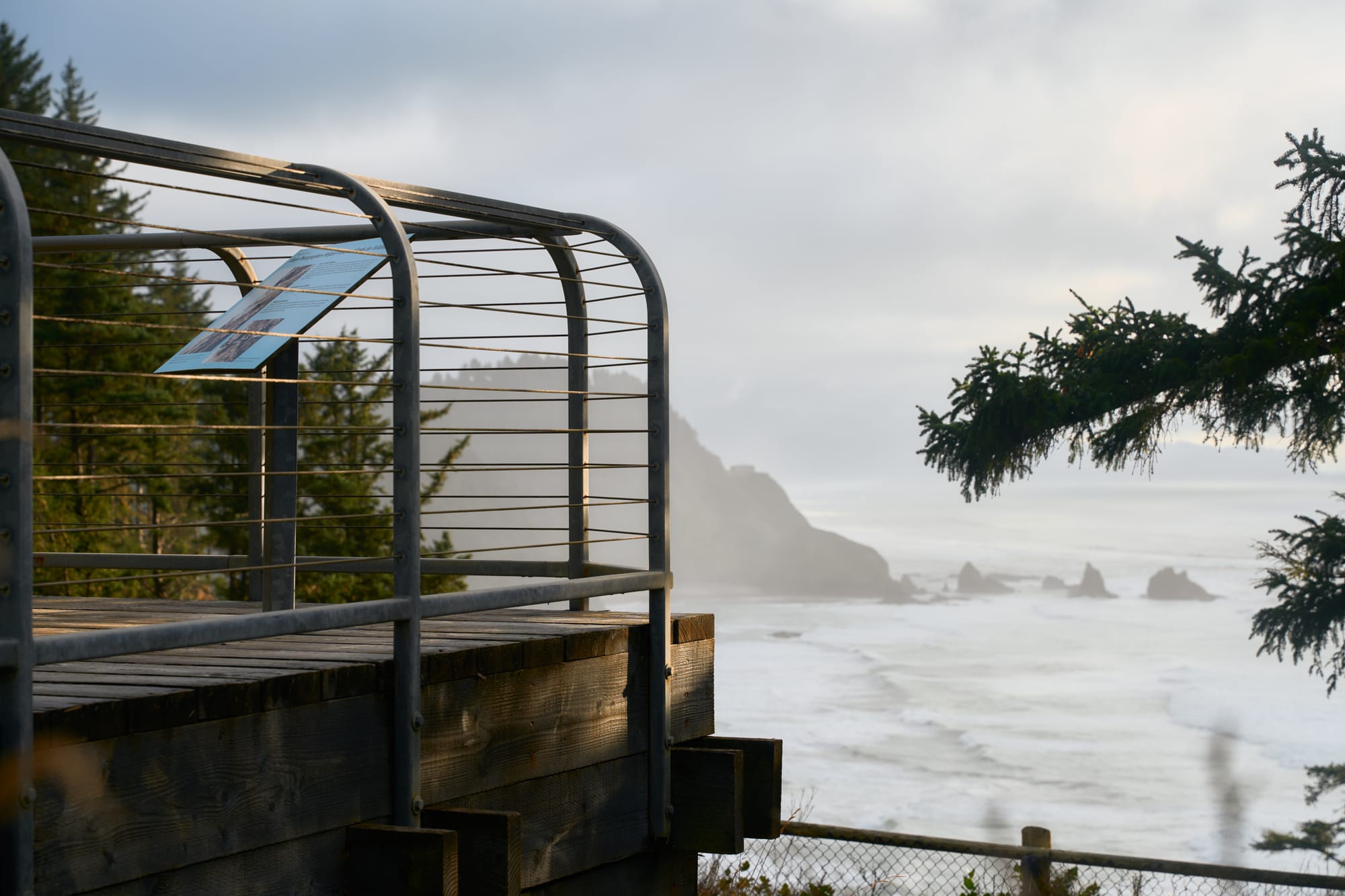
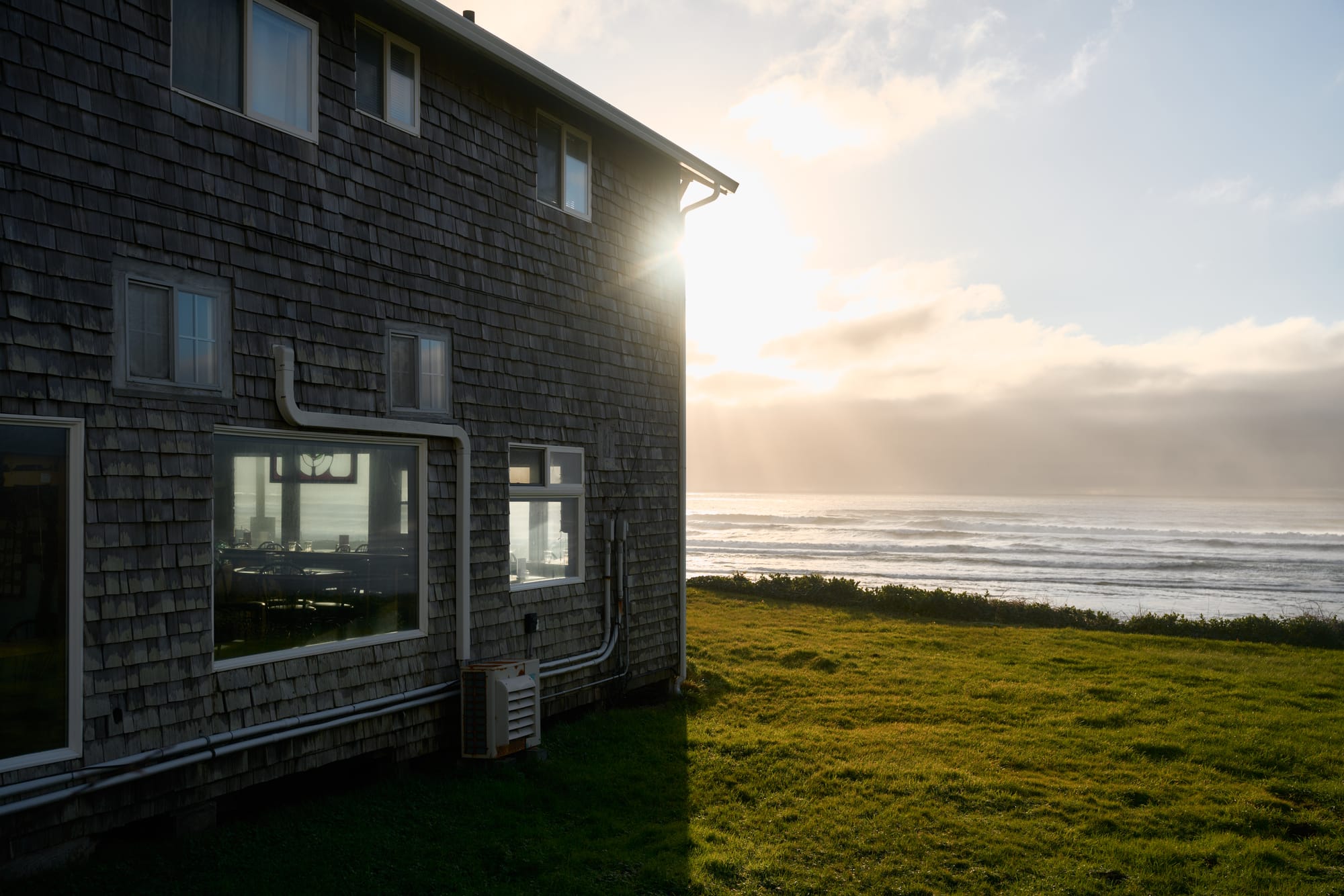
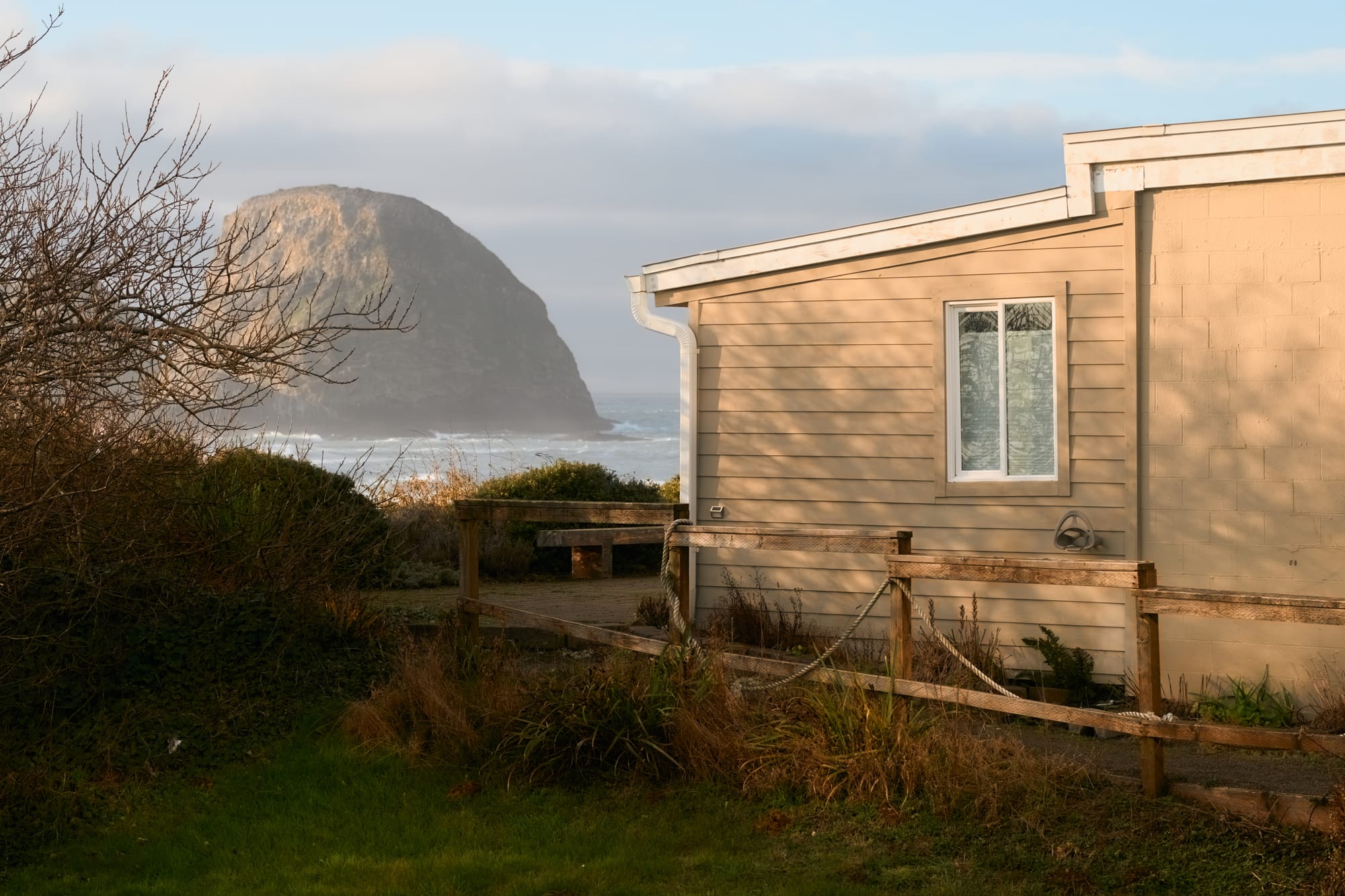
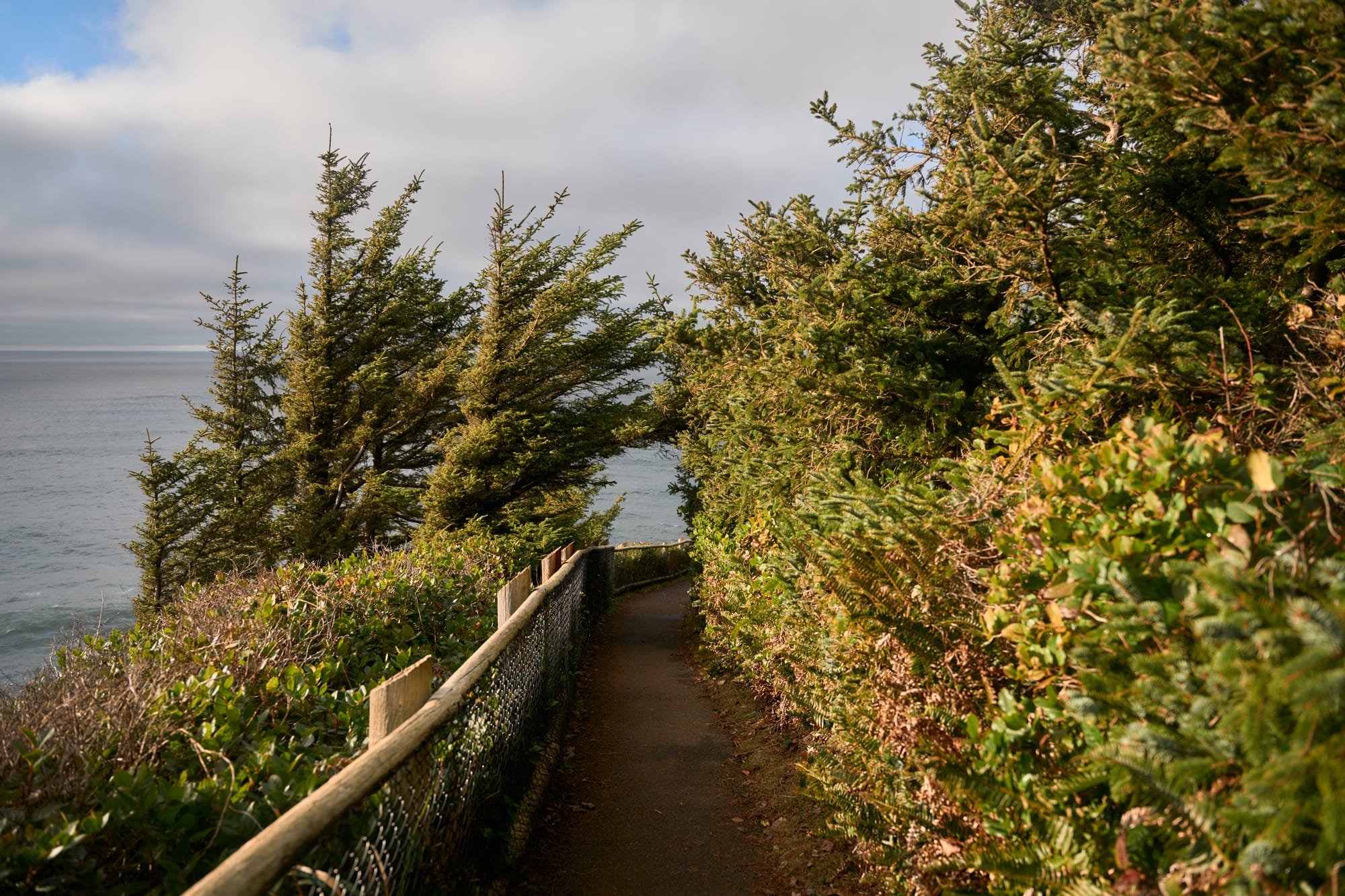
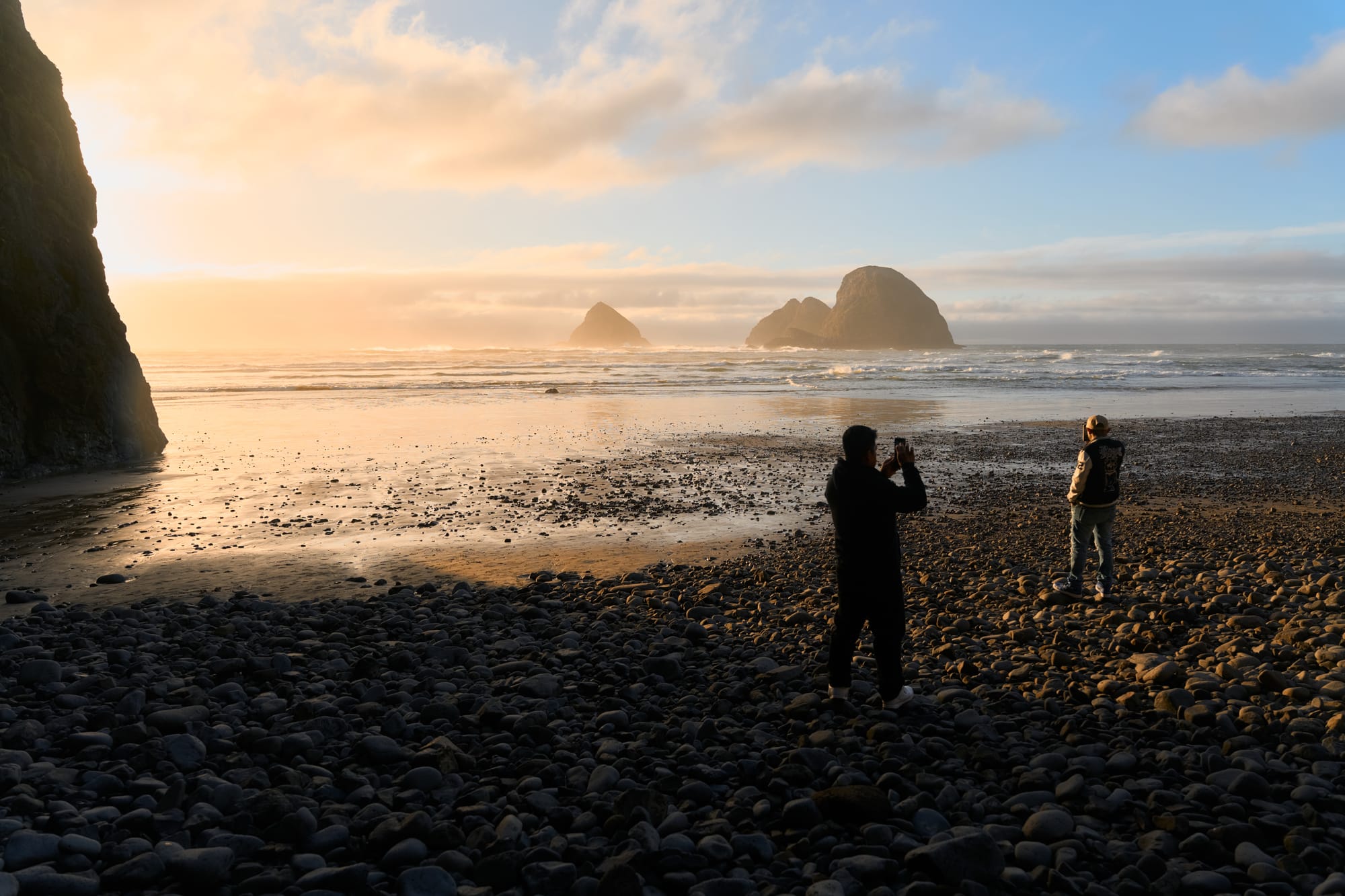
This area looks out onto Three Arch Rocks National Wildlife Refuge and Wilderness, a collection of sea stacks crucial to hundreds of thousands of seabirds and sea lions. It owes its protection to photography. In the early 1900s, hunters mass slaughtered animals on the islands. Two young bucks, William L. Finley and Herman Bohlman, used the technology to share their wildlife studies with Big Teddy Roosevelt, who enacted the protected status it's enjoyed ever since.
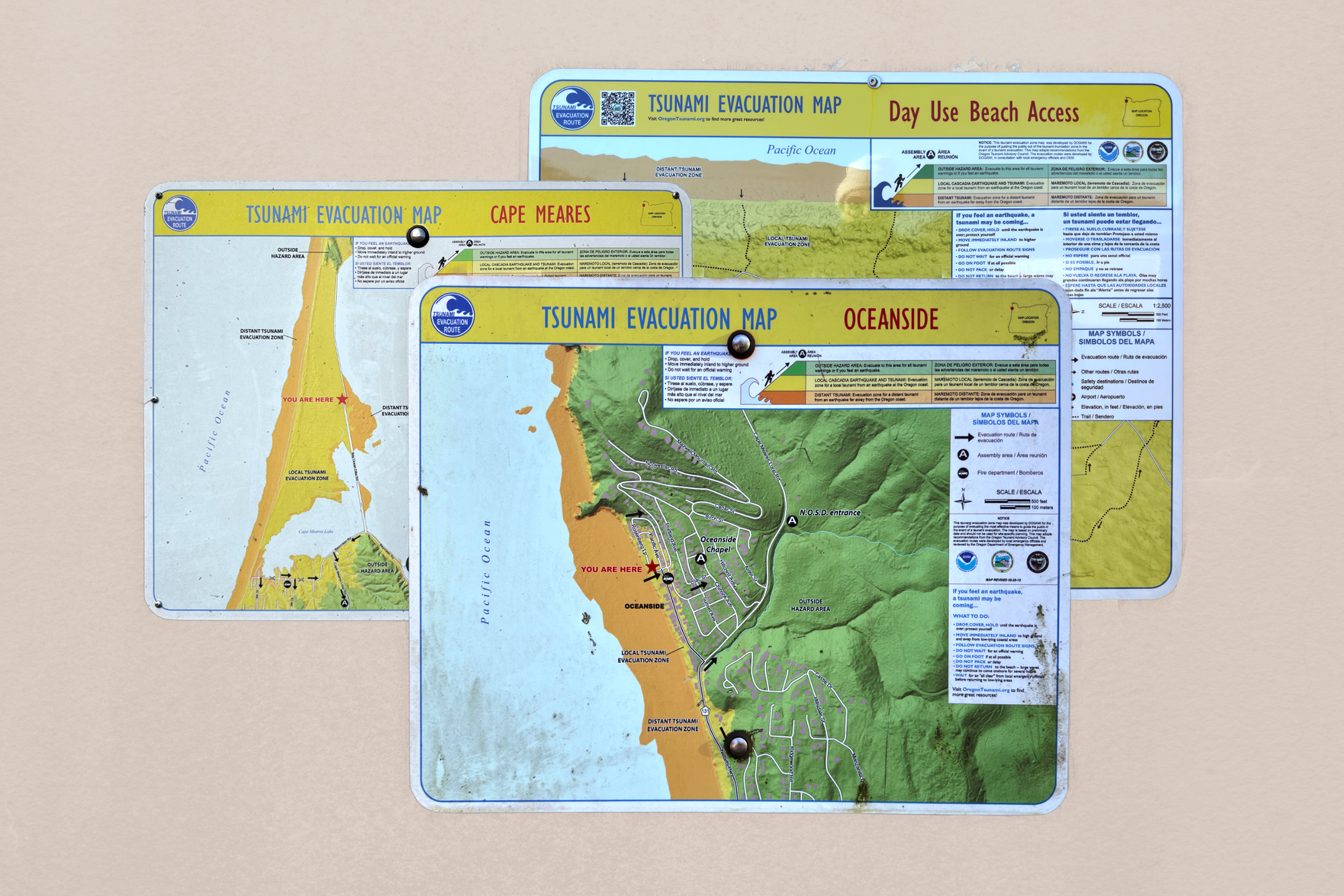
On the West Coast you can't ignore the threat of earthquakes and tsunamis. I grew up with the trademark blue and white signs wayfinding to higher ground. These maps were new to me, with color coded hazard zones. Ironically enough, during this trip a 6.0 magnitude quake struck a couple hundred miles off the coast. No threat, but I can't help but imagine the scenes the day "Big One" comes. Last time I checked it's forecasted at about a 50% chance of happening in my lifetime.
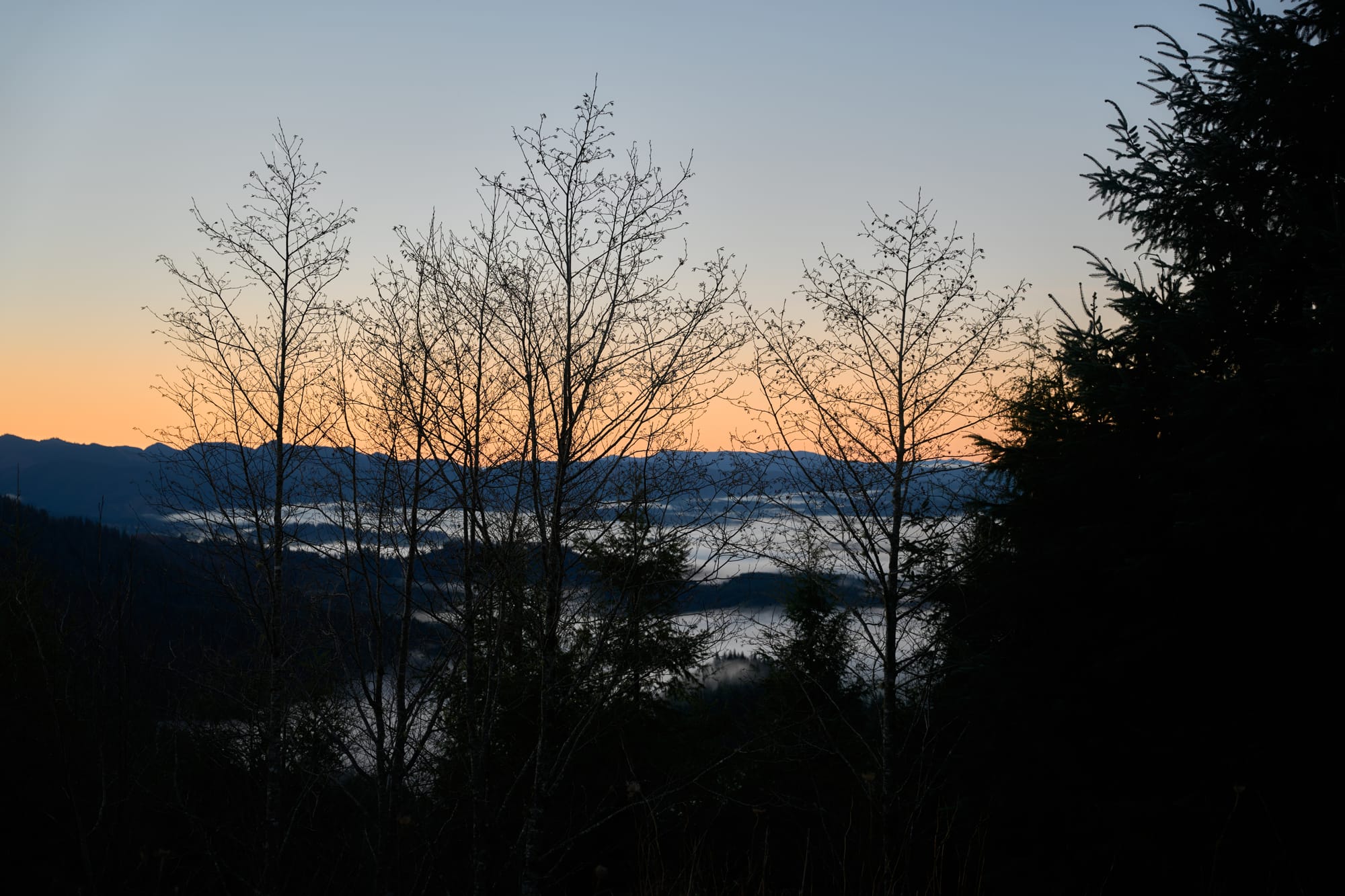
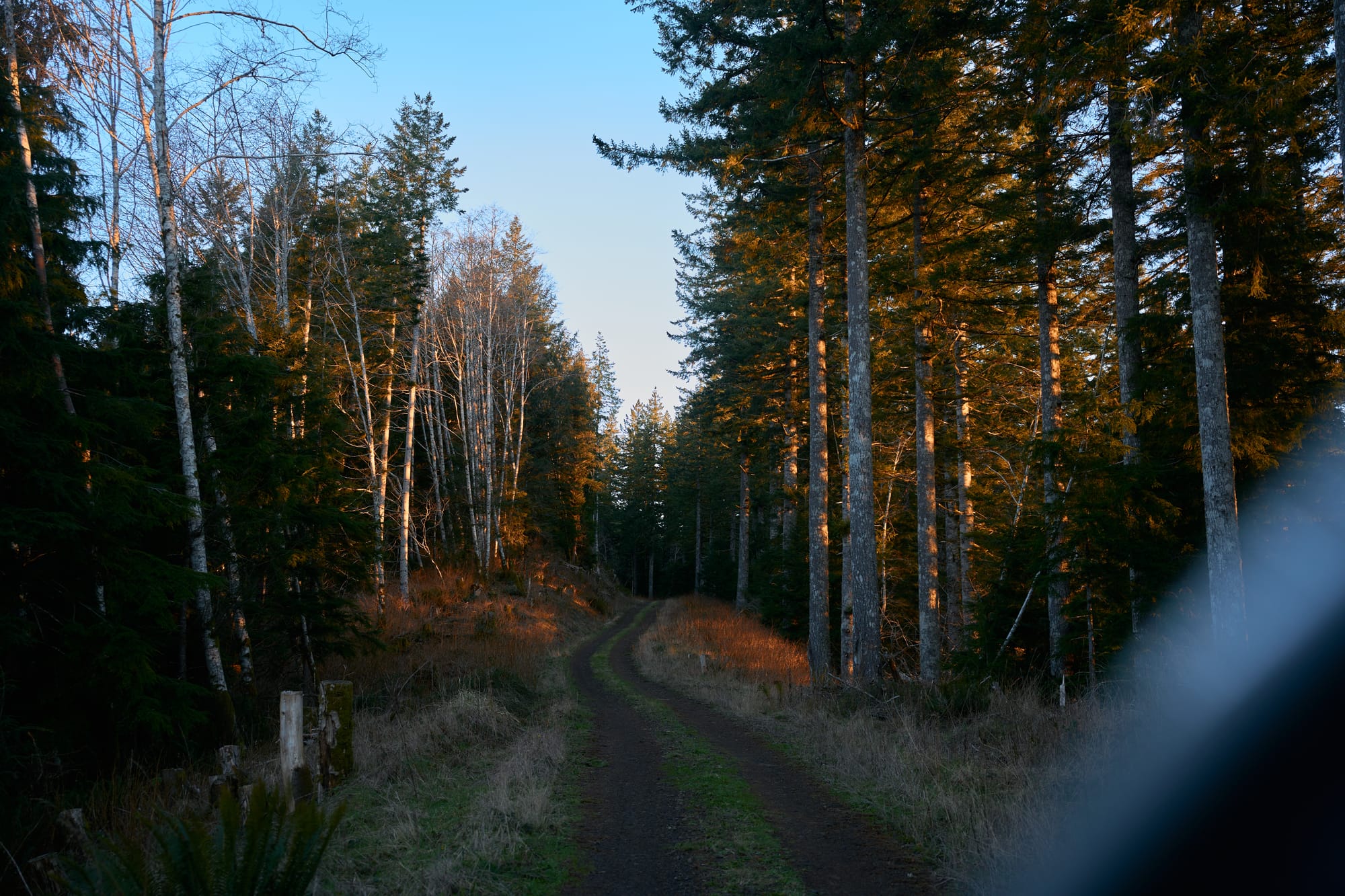
That night I went back to the dispersed campsite I scouted earlier in the day. Location: undisclosed. Looking down on [redacted]. In high traffic outdoors destinations, campsite reservations fill up fast in the summer months. On this trip I woke up early to reserve a spot in Mt. Hood for July. So having miscellaneous places to crash in the woods is a great asset, and finding them was a major mission on this trip. It's a time consuming process bouncing around the back roads, but this spot served me well.
I've camped out of my 4Runner a few ways. You have to remove seats and fill in some bumps to make a flat sleeping platform. Initially I solved this with a cot before moving out to various tents, but I was determined to sleep inside again to extend my camping season into the rainy months. You can build a platform fairly easily but it would just be dead weight. I had a better solution.
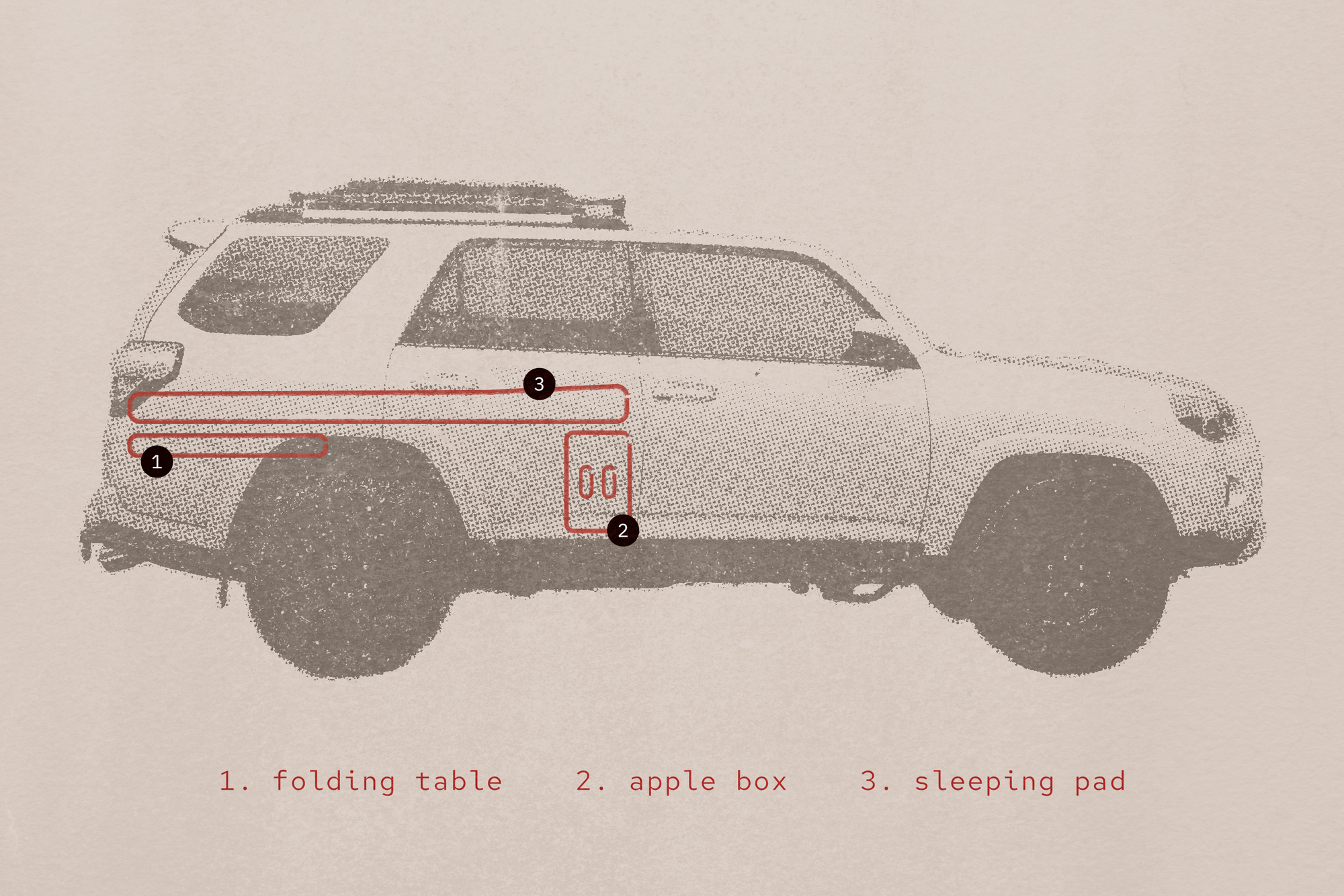
A cheap folding table goes in the trunk to fill the gap at the load floor. An apple box from the film production world fills in the footwell (in "Chicago" height). Throw a sleeping pad on top and it's about as a flat as can be. When not in use they combine into a table and chair.
After that morning in Garibaldi at the pier, I went north to the Manzanita area. I love how navigation on a coastline is flattened to one vector, up or down. This is part of the area I'm planning to backpack later this year on the Oregon Coast Trail. The OCT is unique for long distance thru-hiking, passing through beach towns, requiring water crossings and stretches along roads. That's what makes it more interesting to me than the PCT I could link up with to my east. The OCT is dynamic, with a mix of challenges and opportunities from civilization.
One big POI on the OCT is Neahkahnie Mountain in the second set of headlands down from the start at the mouth of the Columbia River. I hiked the steep switchbacks to photograph this famous vista through sunset.
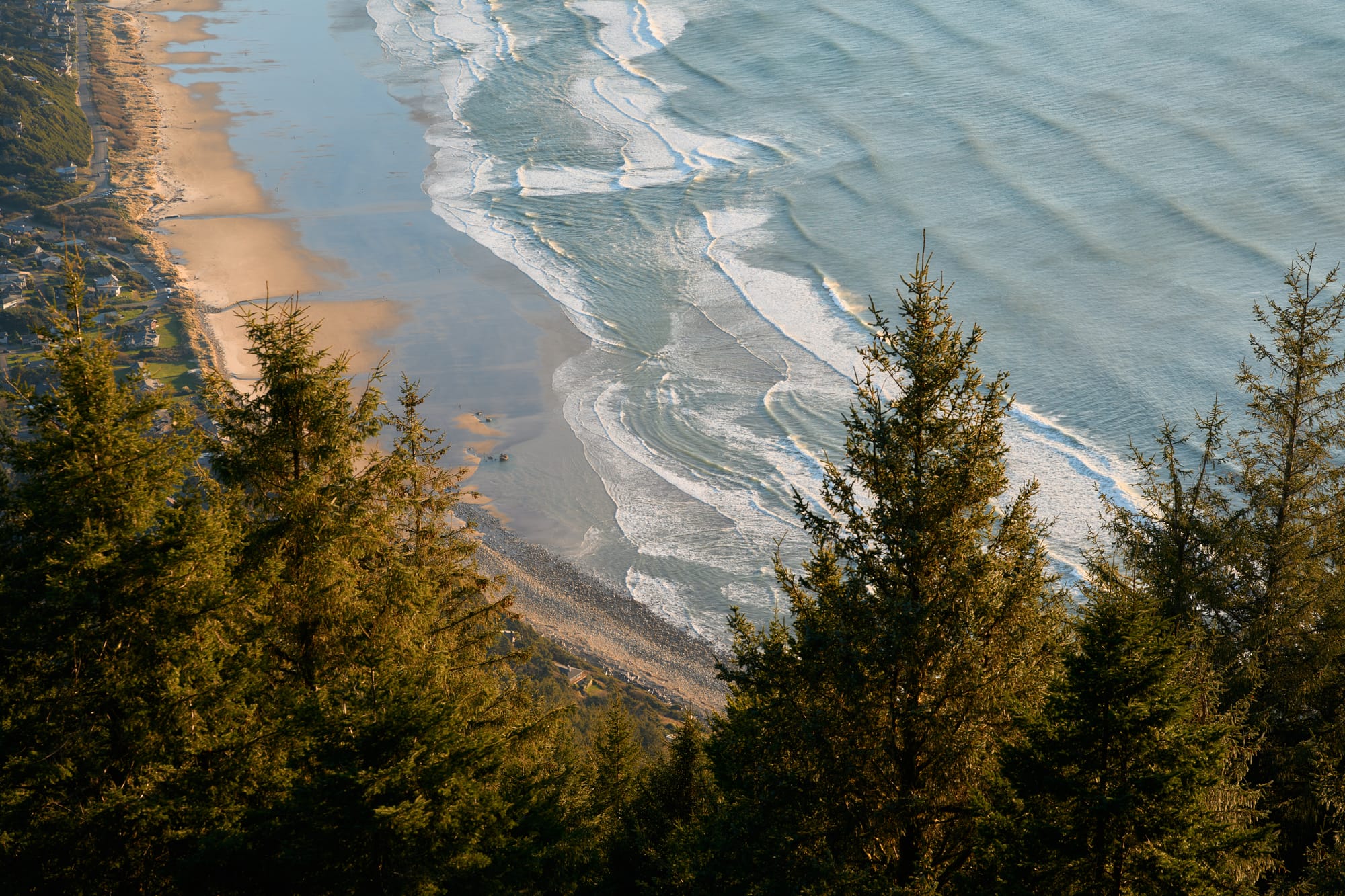
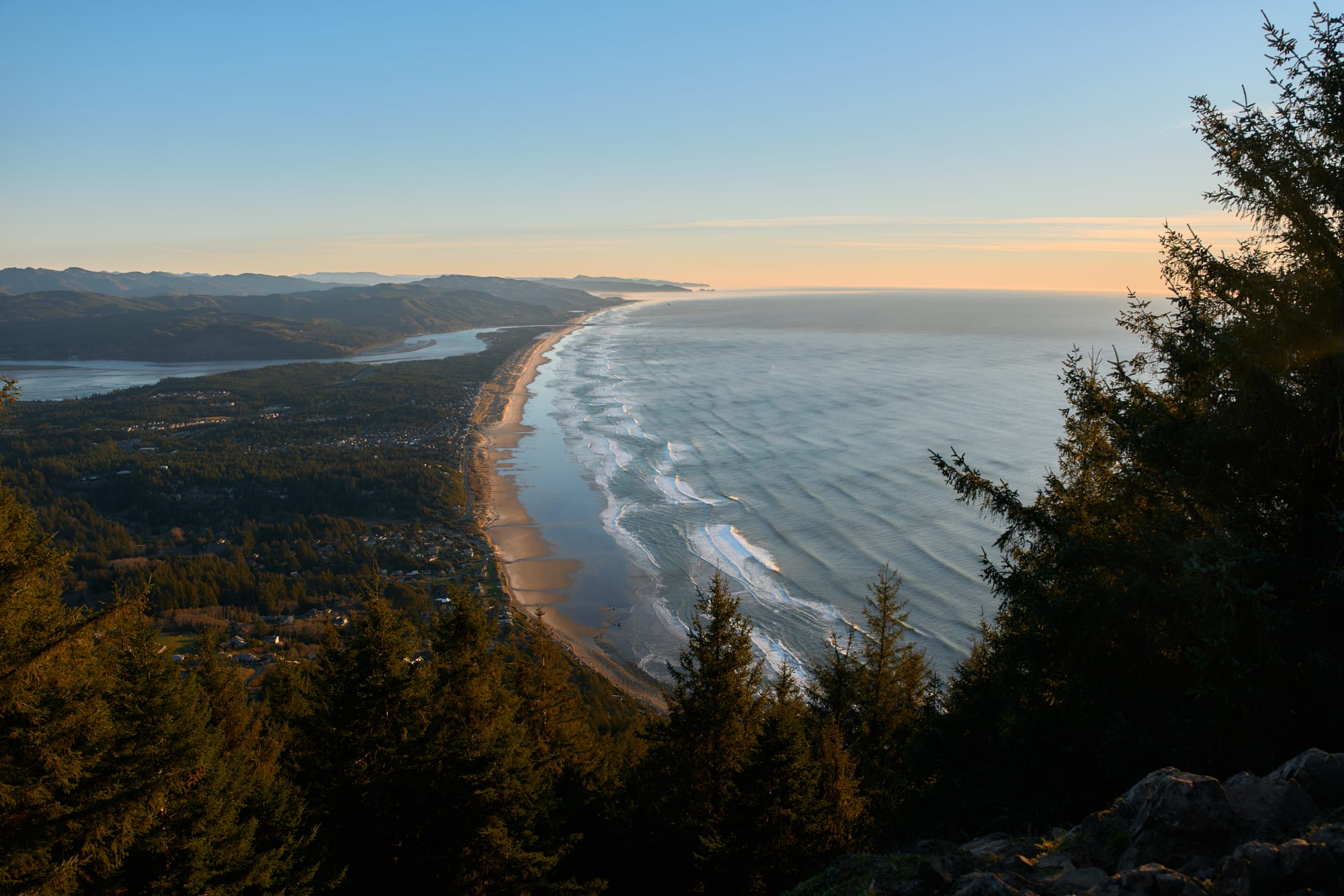
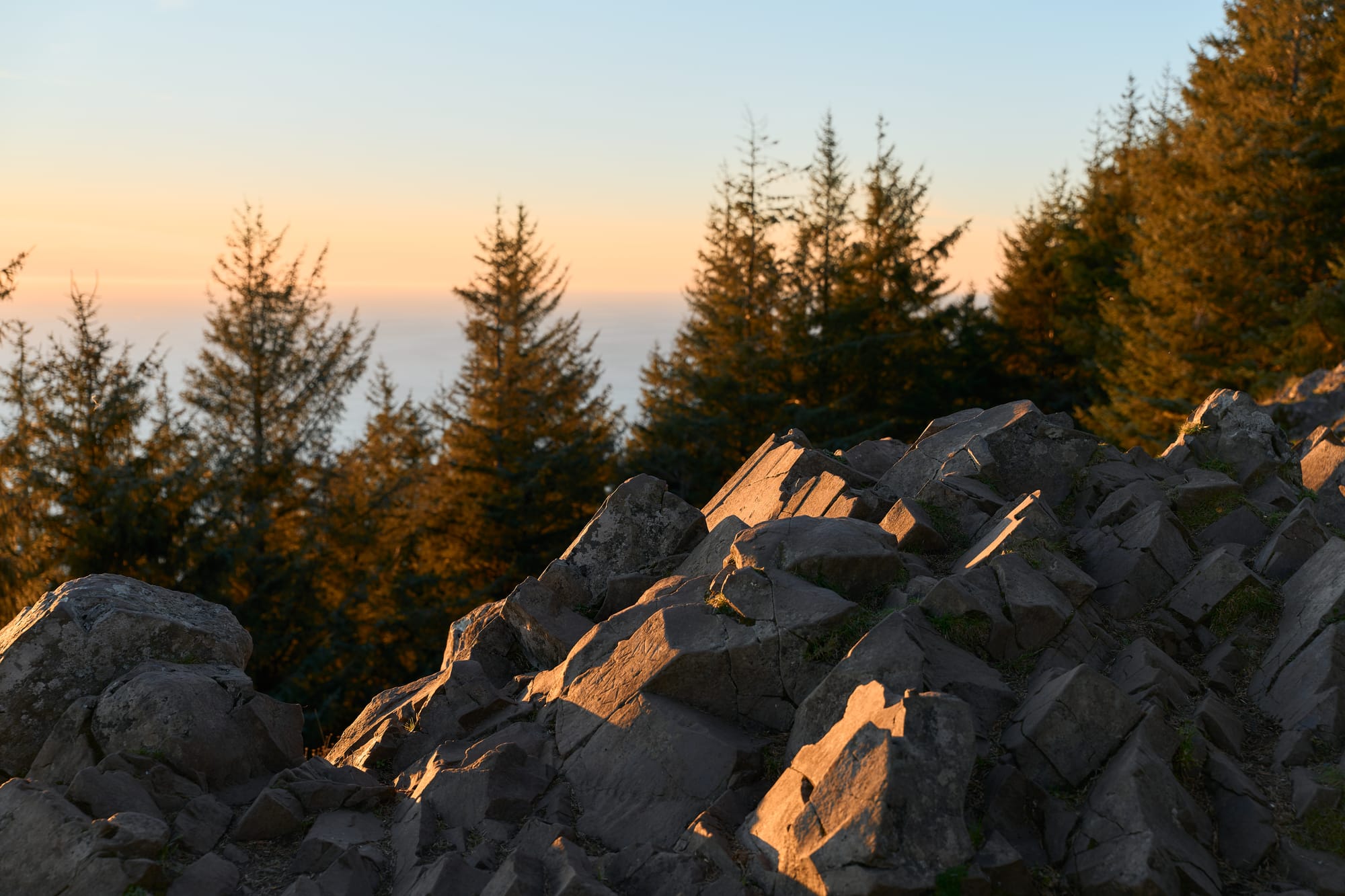
A legend tells of Spanish treasure buried on the mountain. Evidence might be thin, but it's plausible. Dozens of Spanish ships went missing on the trade route from the Philippines to California. Buried treasure on the Oregon coast certainly captured the imagination of the silver screen in... say it with me... the 2006 low-budget kids movie Tillamook Treasure!
Let's take a peek at my camera setup. For casual trips like this I limit my gear to what fits inside a Tenba BYOB 10 camera cube. I shot on my Sony A7 IV, mostly with the Sigma 24-70 F/2.8 mark 2.
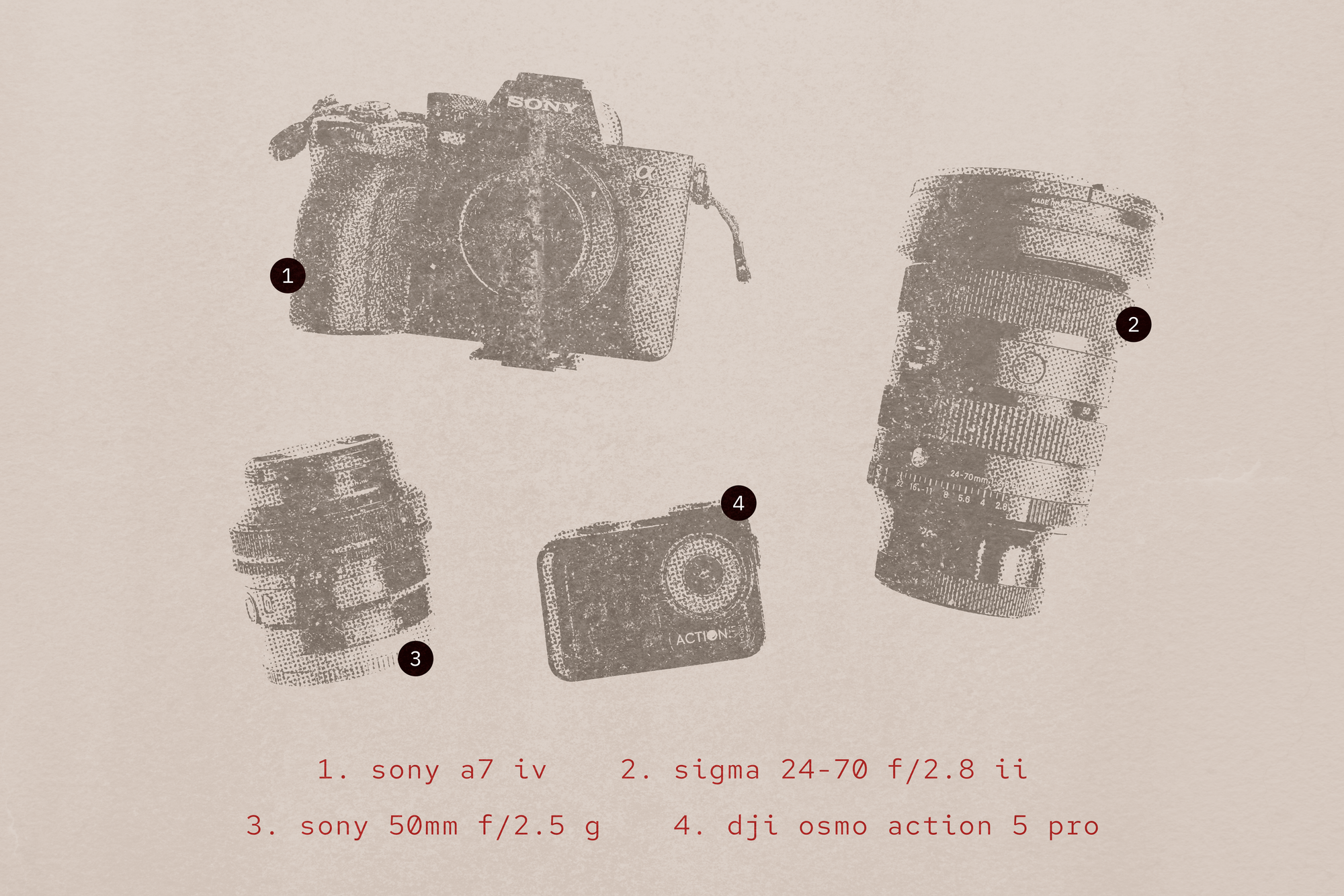
At the moment I'm interested in picking up the Fujifilm X100vi, which has a fixed 35mm lens. By mostly using the zoom on this trip, I wanted to take a survey of my favorite photos to see what focal lengths I naturally gravitated towards. I was going to actually calculate the average, but the math doesn't quite work because focal length isn't linear to field of view.
However, I can see that my photos took full advantage of the range, with 50mm probably remaining my favorite to isolate a subject and get some compression. But I do see the value in 35mm to show an environment, and I routinely chose options closer to that end to show more context. That's a positive influence of tailoring my work for this blog, where I intend for photos to be viewed larger than social media.
Maybe the sound of off-season is your distant neighbor chopping firewood, the faint crash of waves, and nothing else.
I spent the night at a campground in Nehalem Bay State Park. It sits on the spit, protected from the ocean by a strip of dunes. These luscious grasses were planted by early Europeans to stabilize the sand and prevent erosion. The campground is nearly empty, completely disproportionate to the handful of us staked out in the grassy plots. Playgrounds are empty, as are the hiker-biker, horse, and fly-in camping. Maybe the sound of off-season is your distant neighbor chopping firewood, the faint crash of waves, and nothing else.
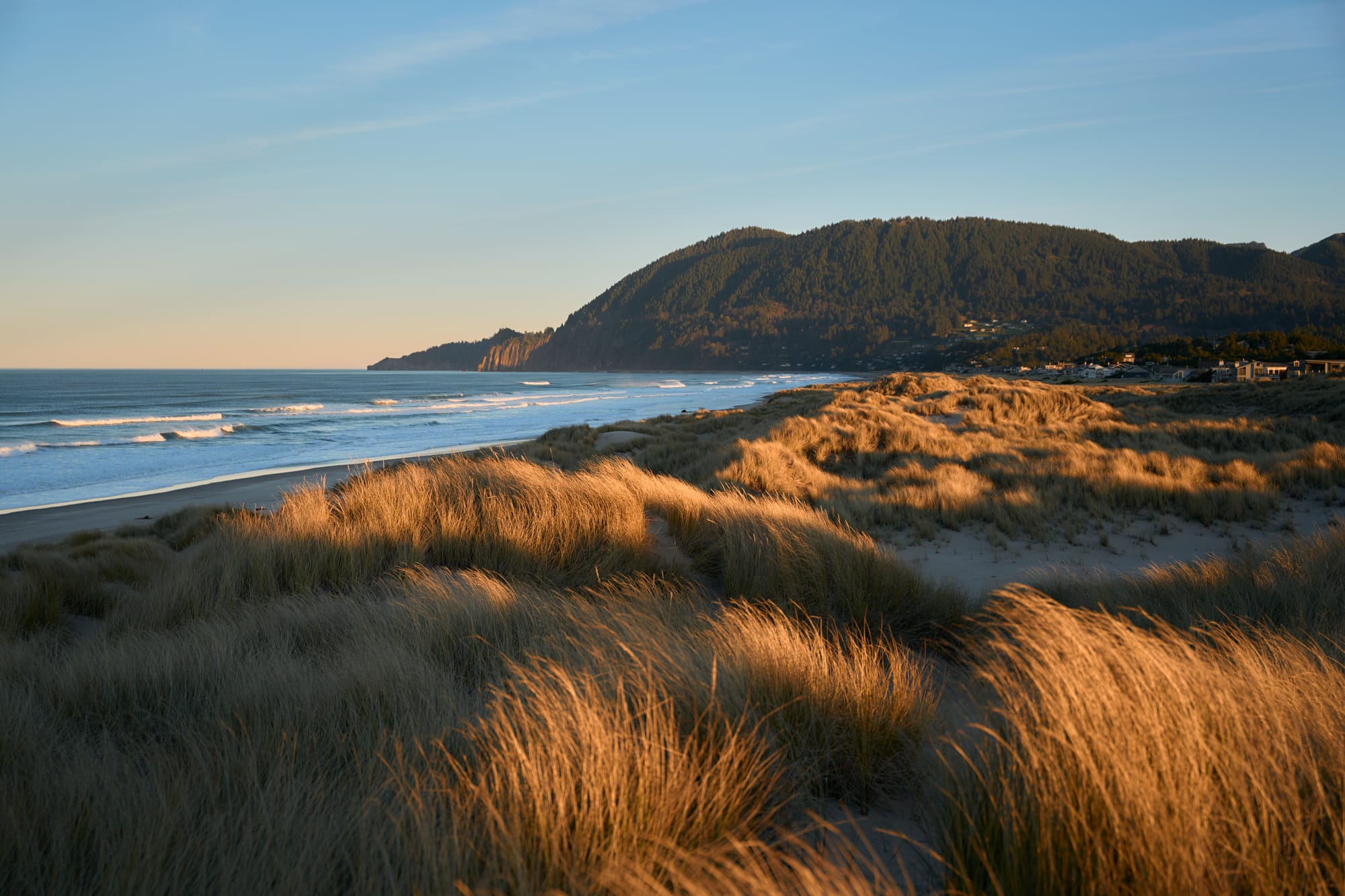
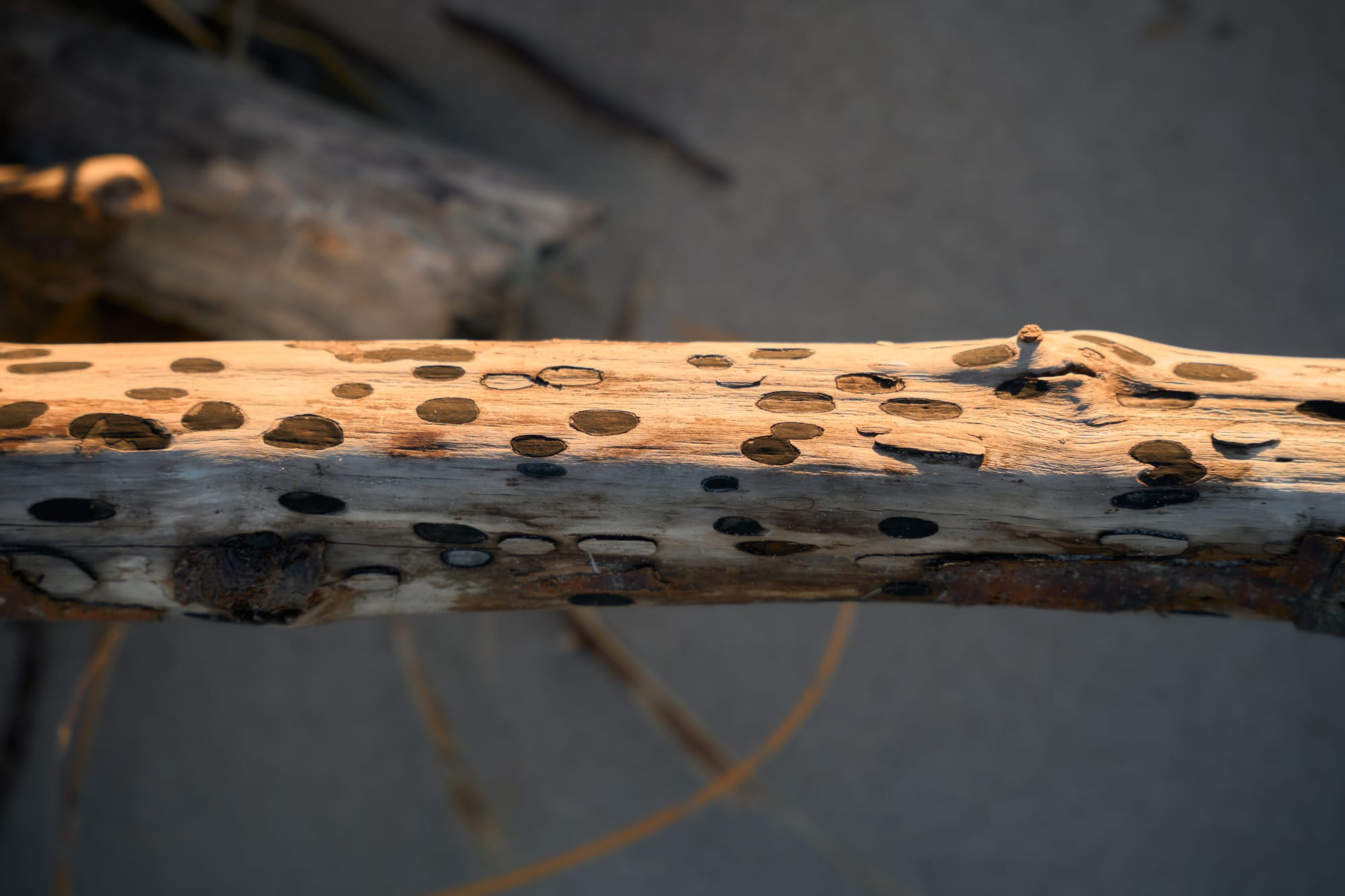
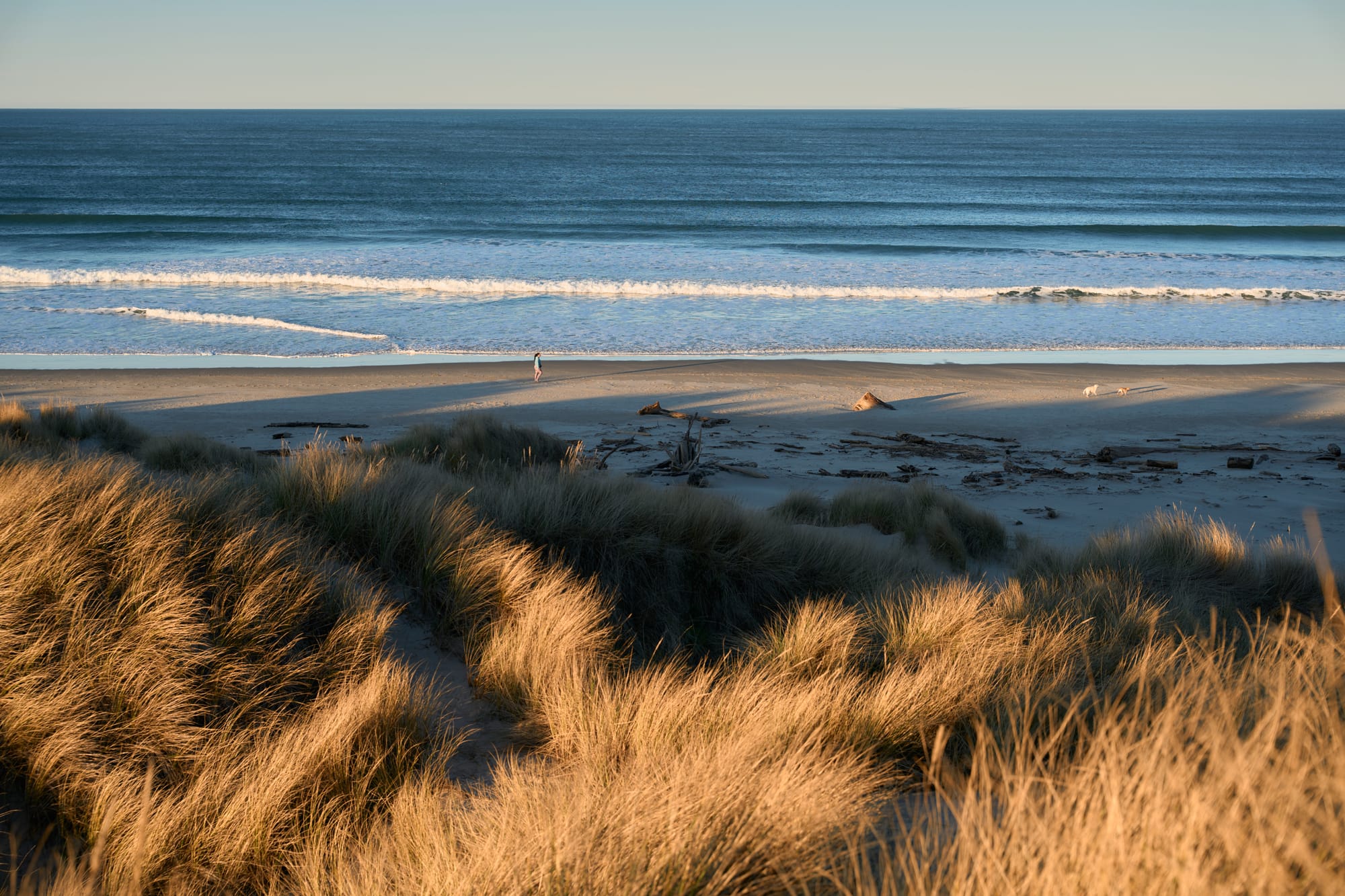
The entirety of the Oregon coast is public land, enumerated from north to south by hundreds of yellow beach access signs. These were installed primarily to make it easier to communicate with emergency services. Now they're an iconic part of the built environment and helpful reference for hikers.
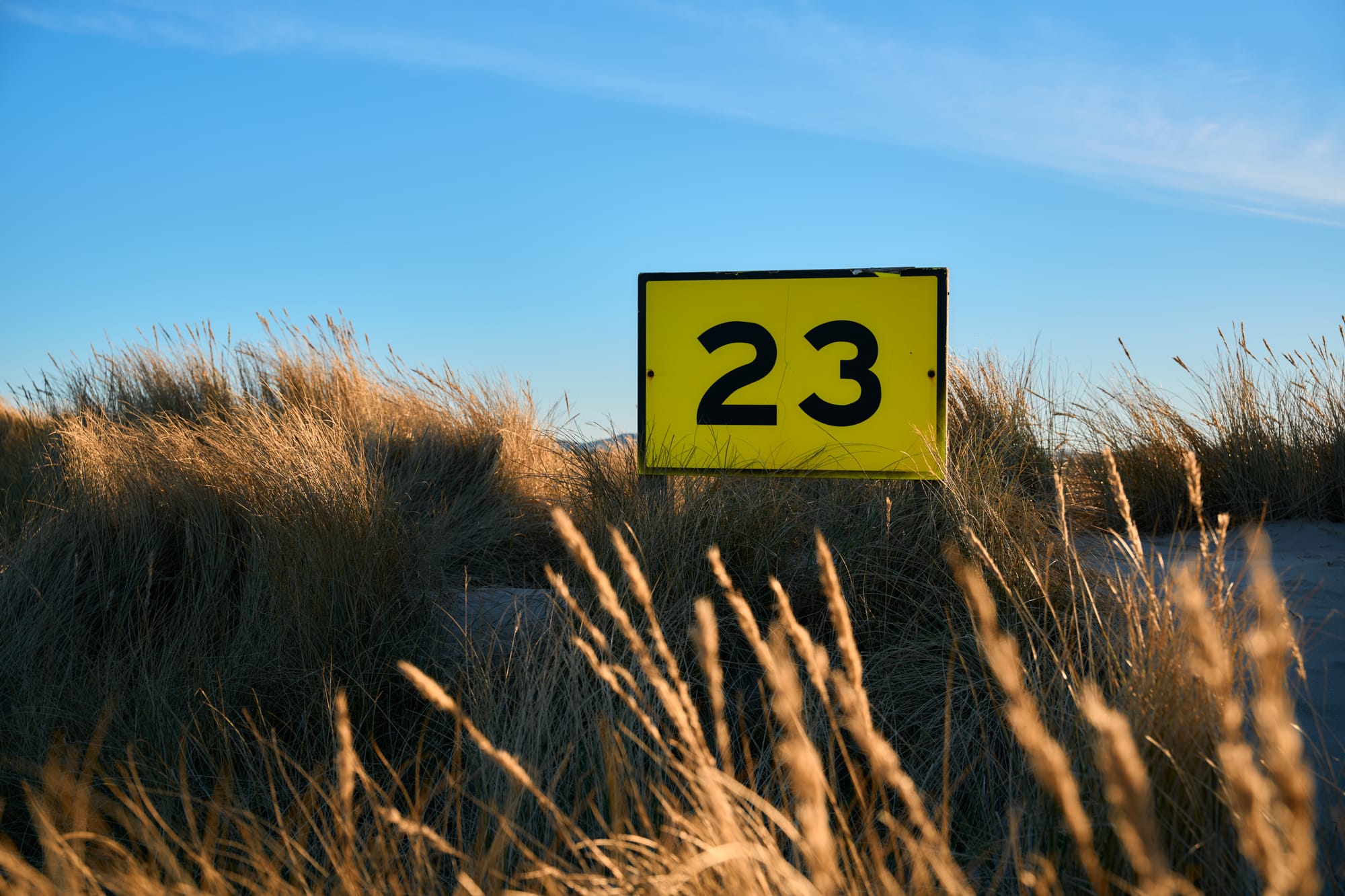
I drove from 23 all the way to beach access sign 1C, at the very tip of Oregon where my OCT trek will begin. I poked around Fort Stevens, a retired military base that saw WWII's only enemy fire on the contiguous US. A Japanese submarine shot the damn baseball field, a humiliating blow to American culture I'm surprised we overcame. Now its big grassy fields are home to elk wintering at lower elevation.
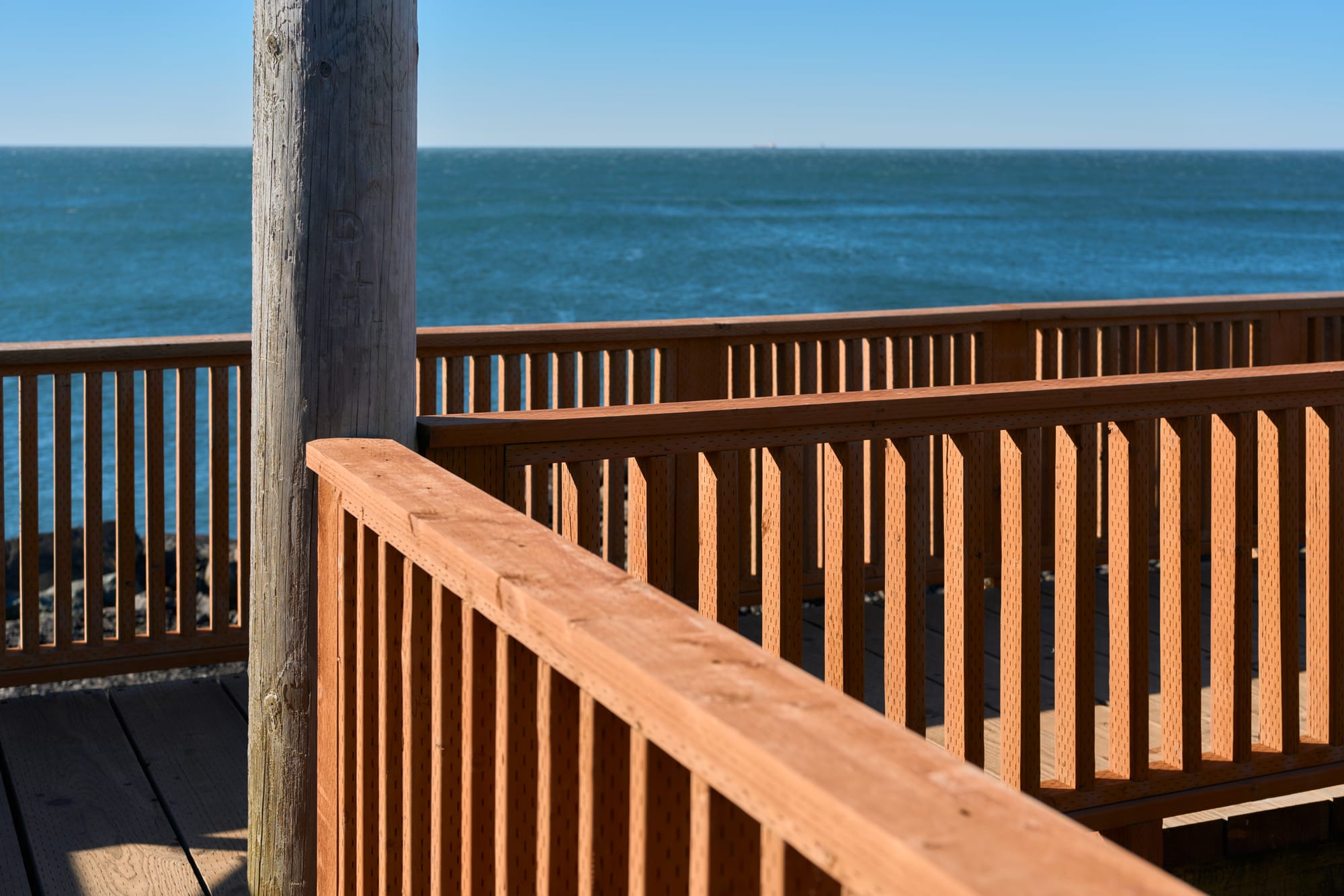
Finally I went to Astoria, the small city just inside the mouth of the Columbia River.
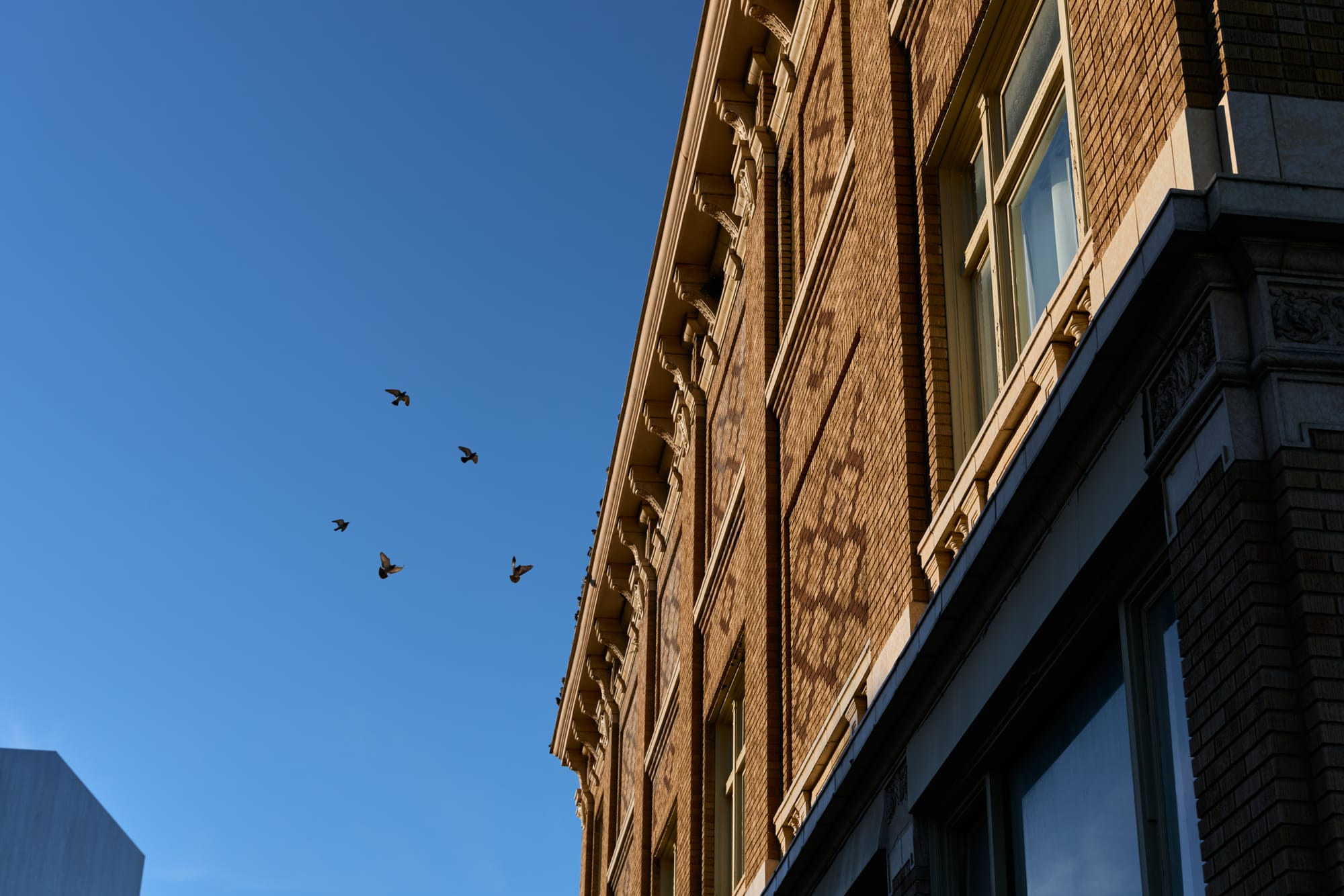
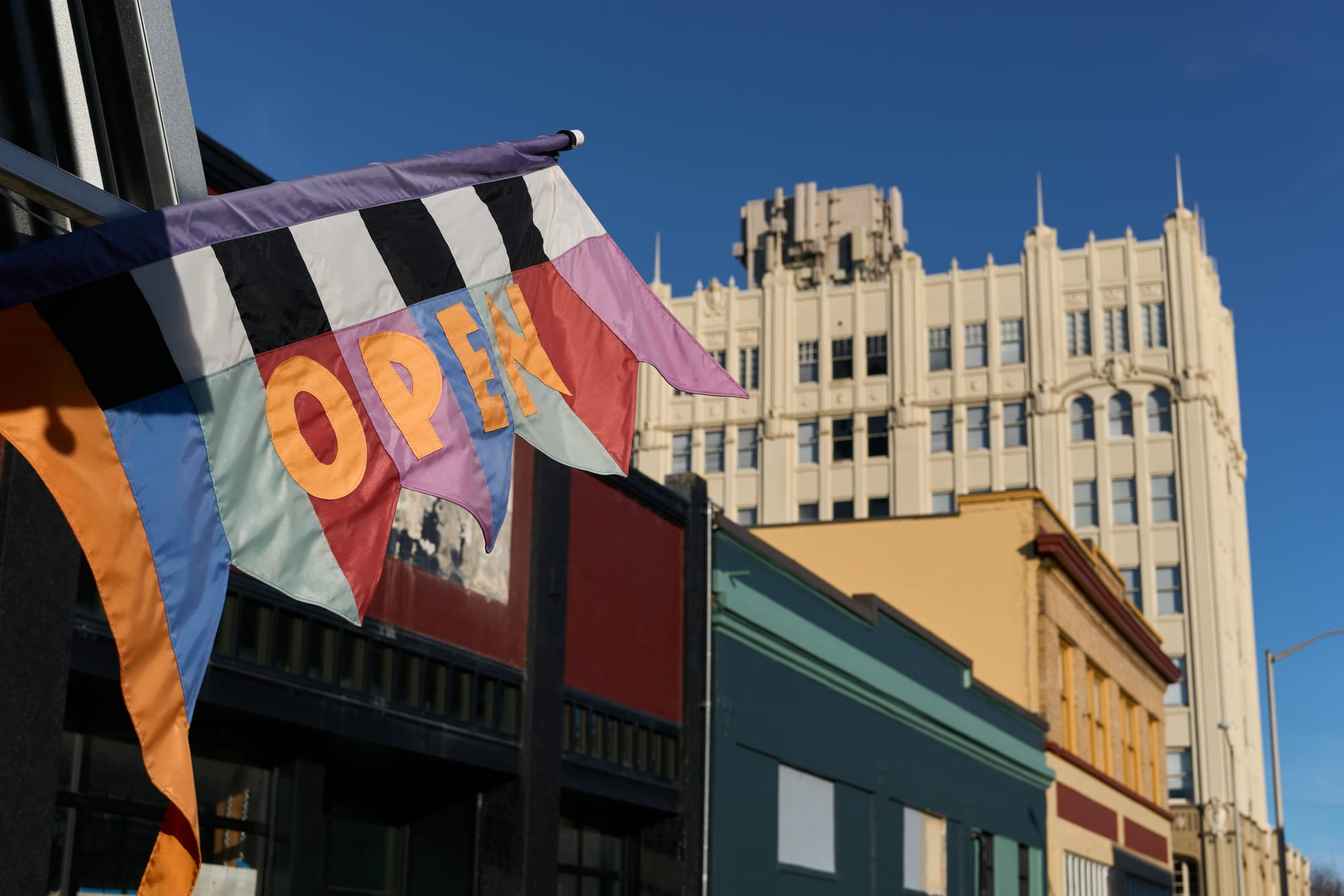
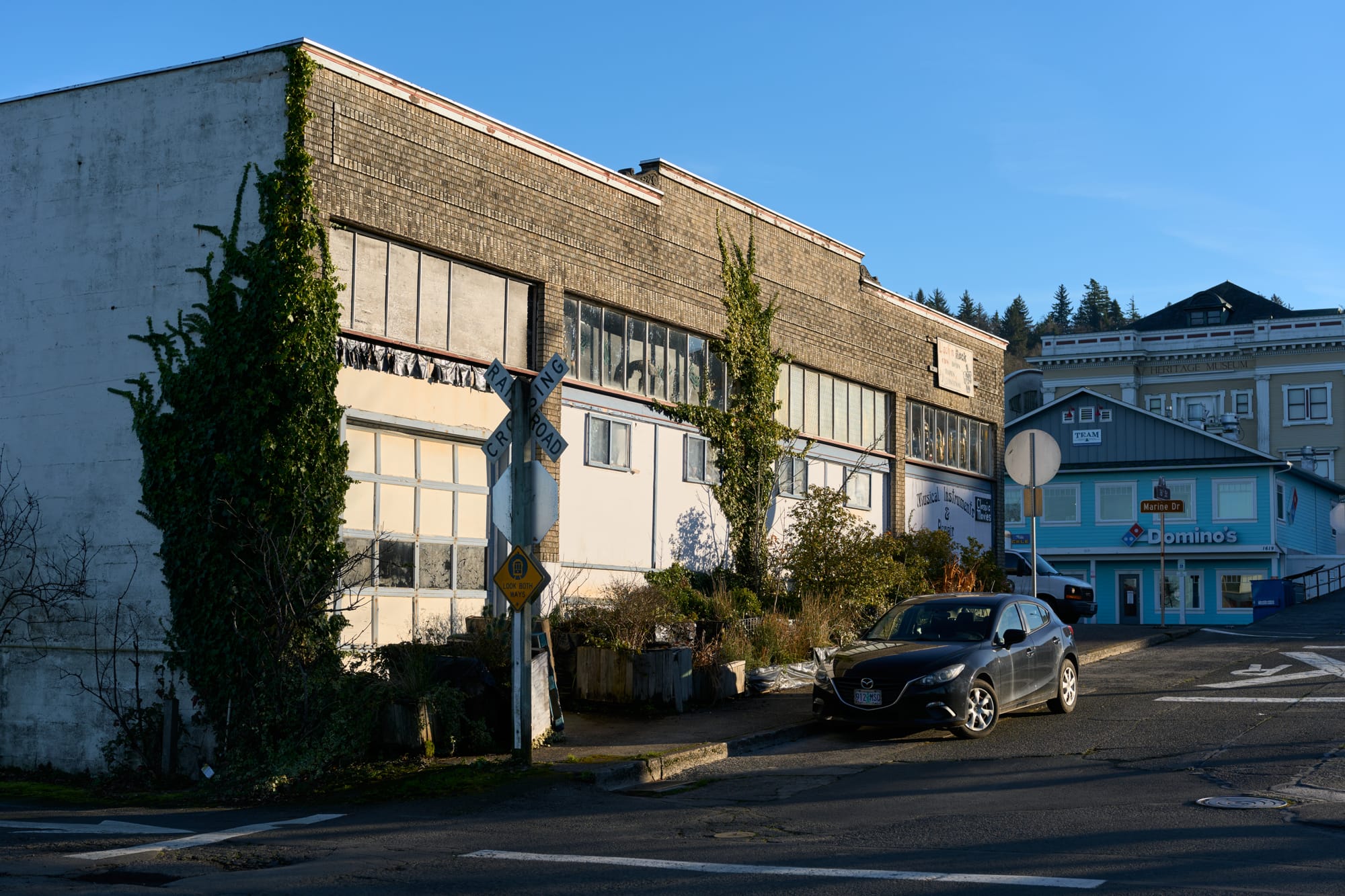
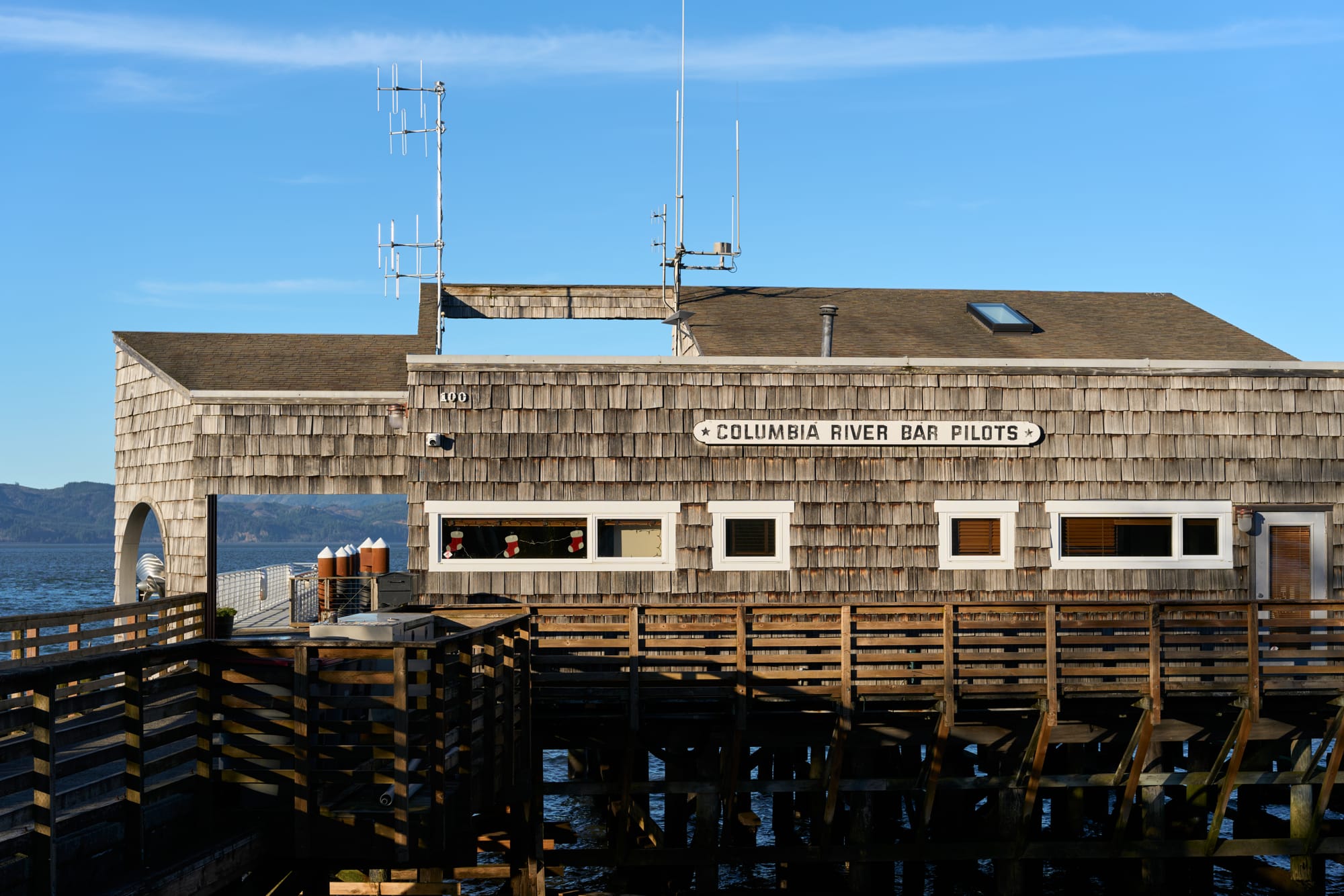
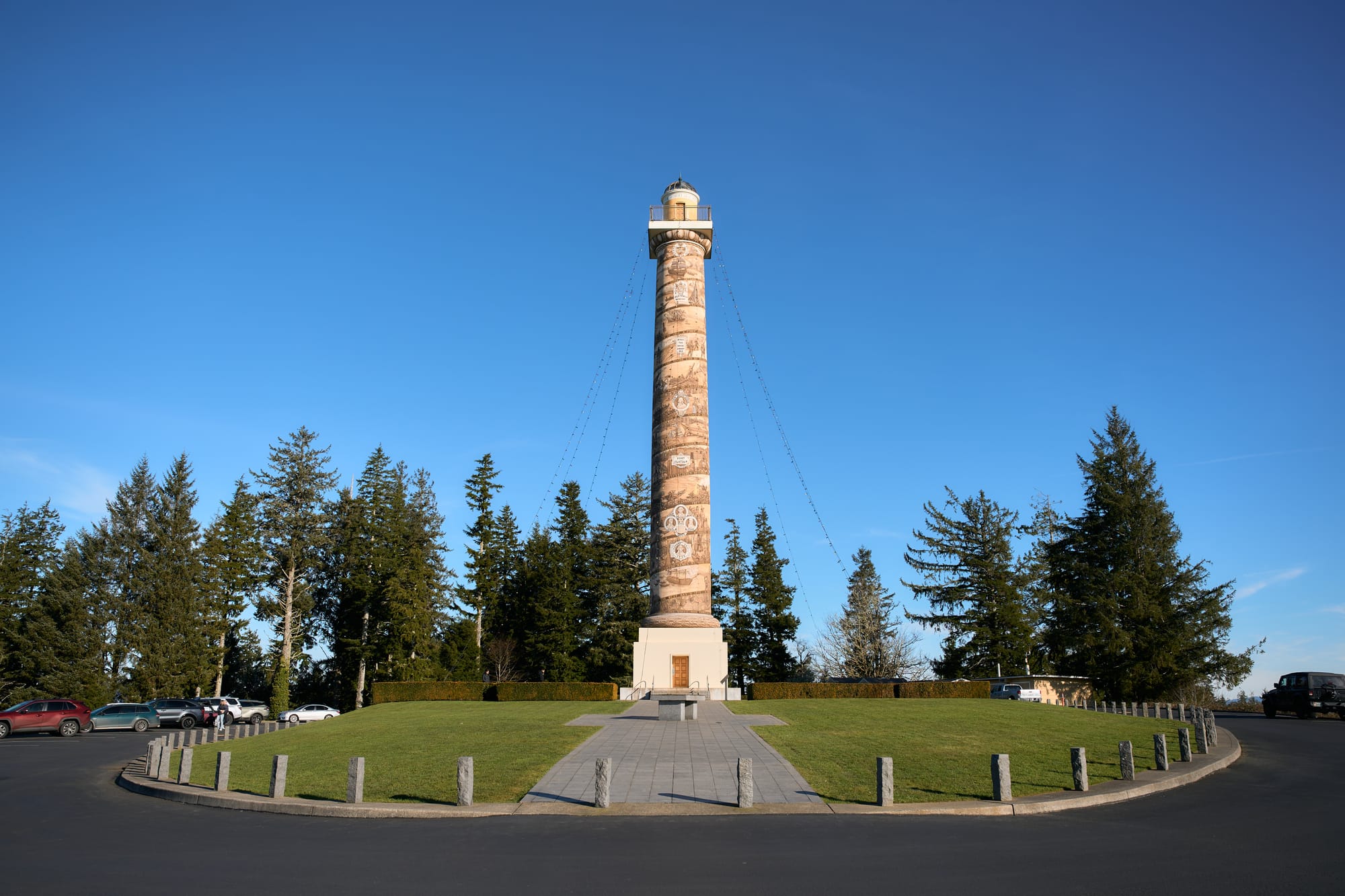
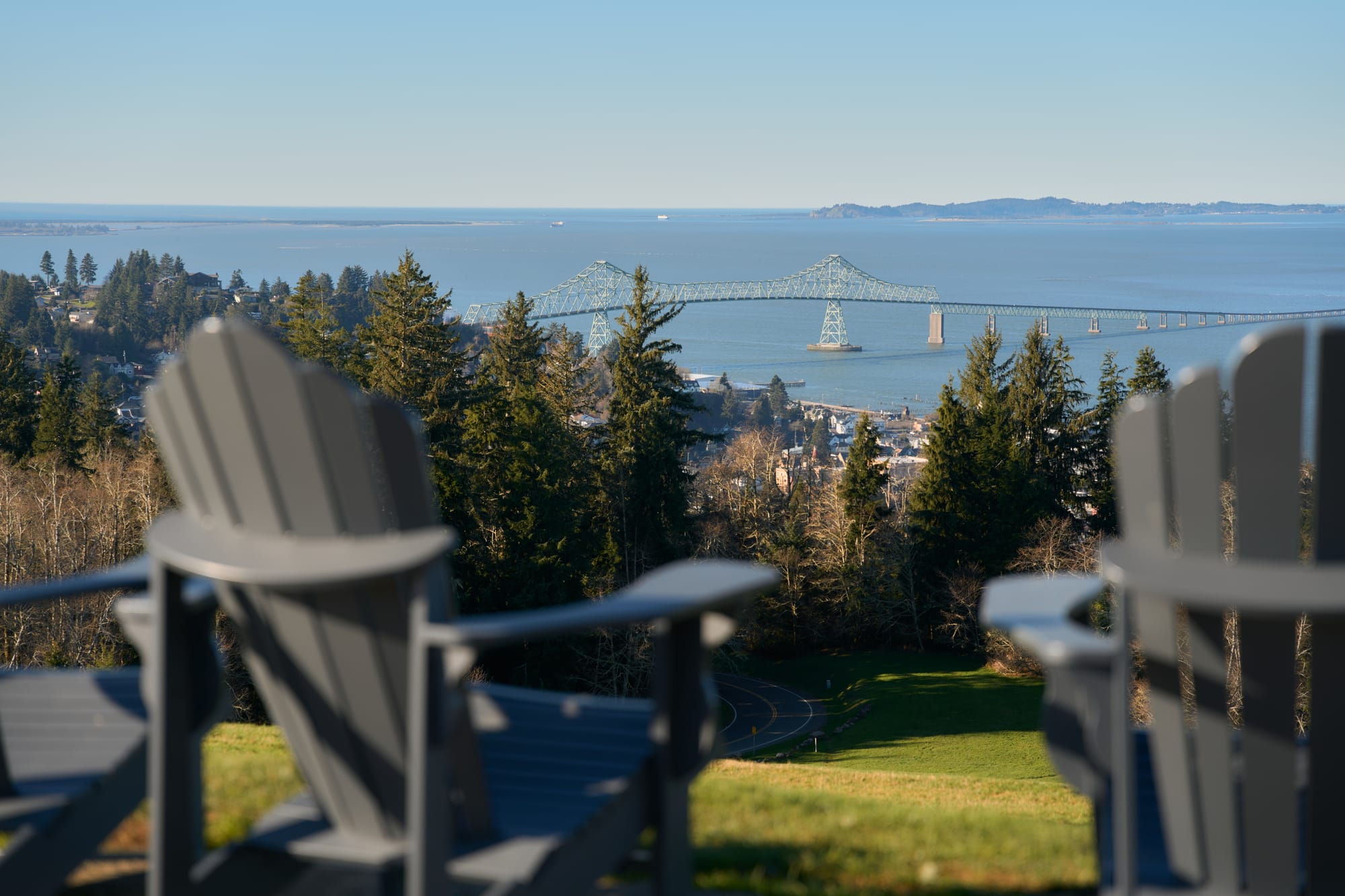
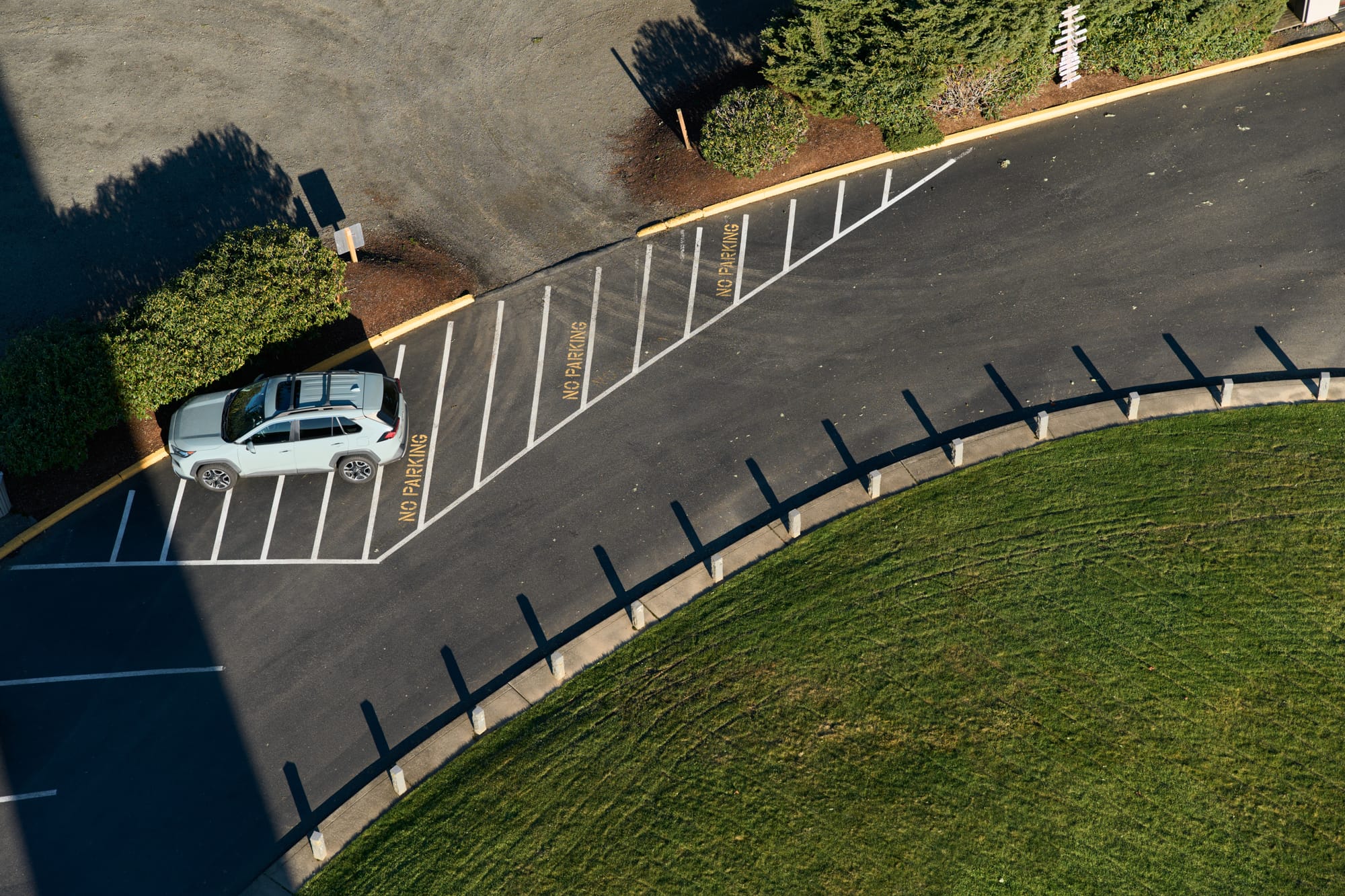
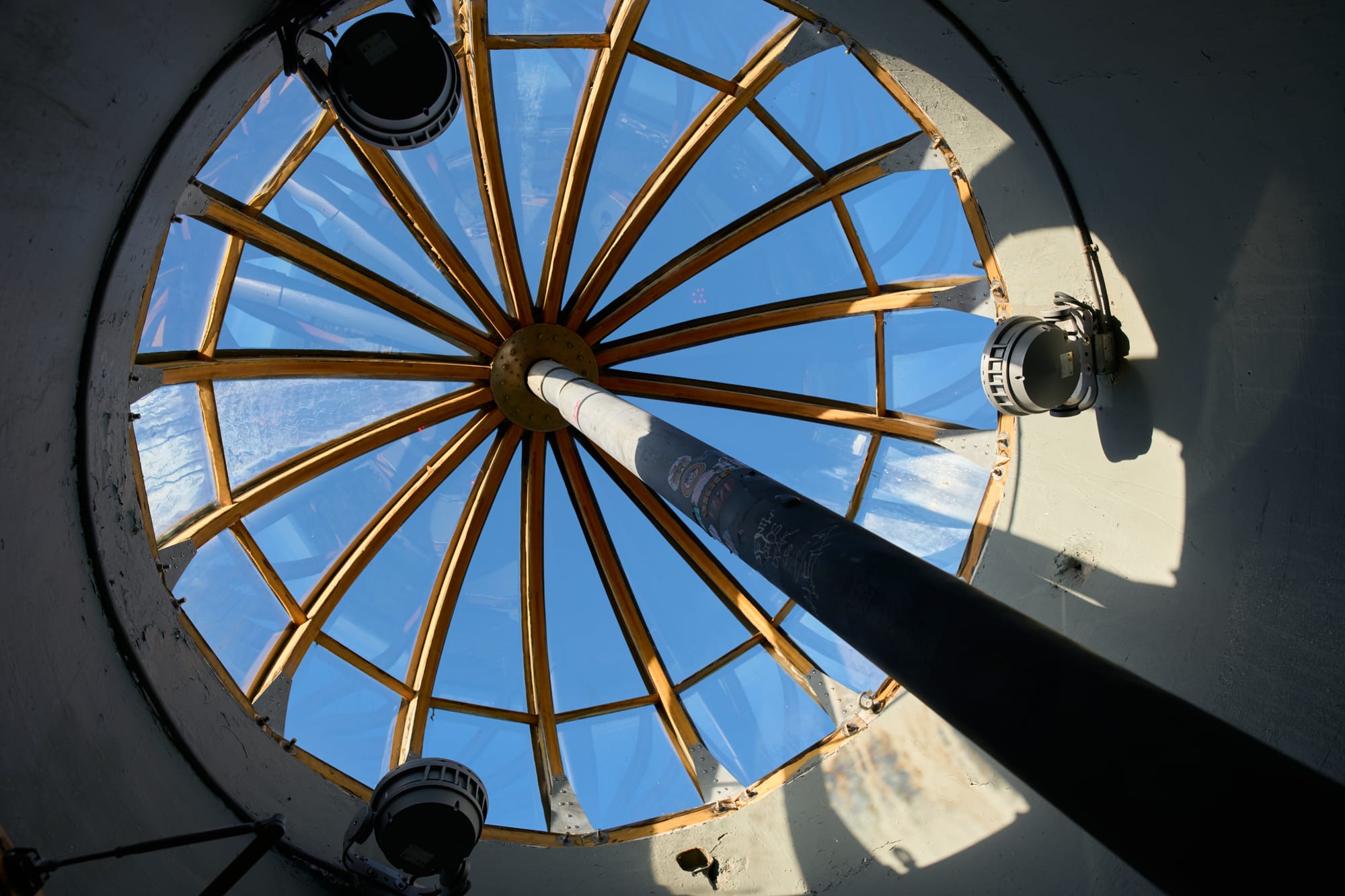
View from the Astoria Column at the top of town.
Astoria is a curious place. It's still influenced by industry: natural resources and shipping. But the newer guard of arts and culture has been growing roots for a couple generations. That arts and industry alloy is well enough represented by its namesake, John Jacob Astor. The downtown grid is largely historic buildings with original facades and signage, while colorful Victorian houses pepper the steep neighborhoods.
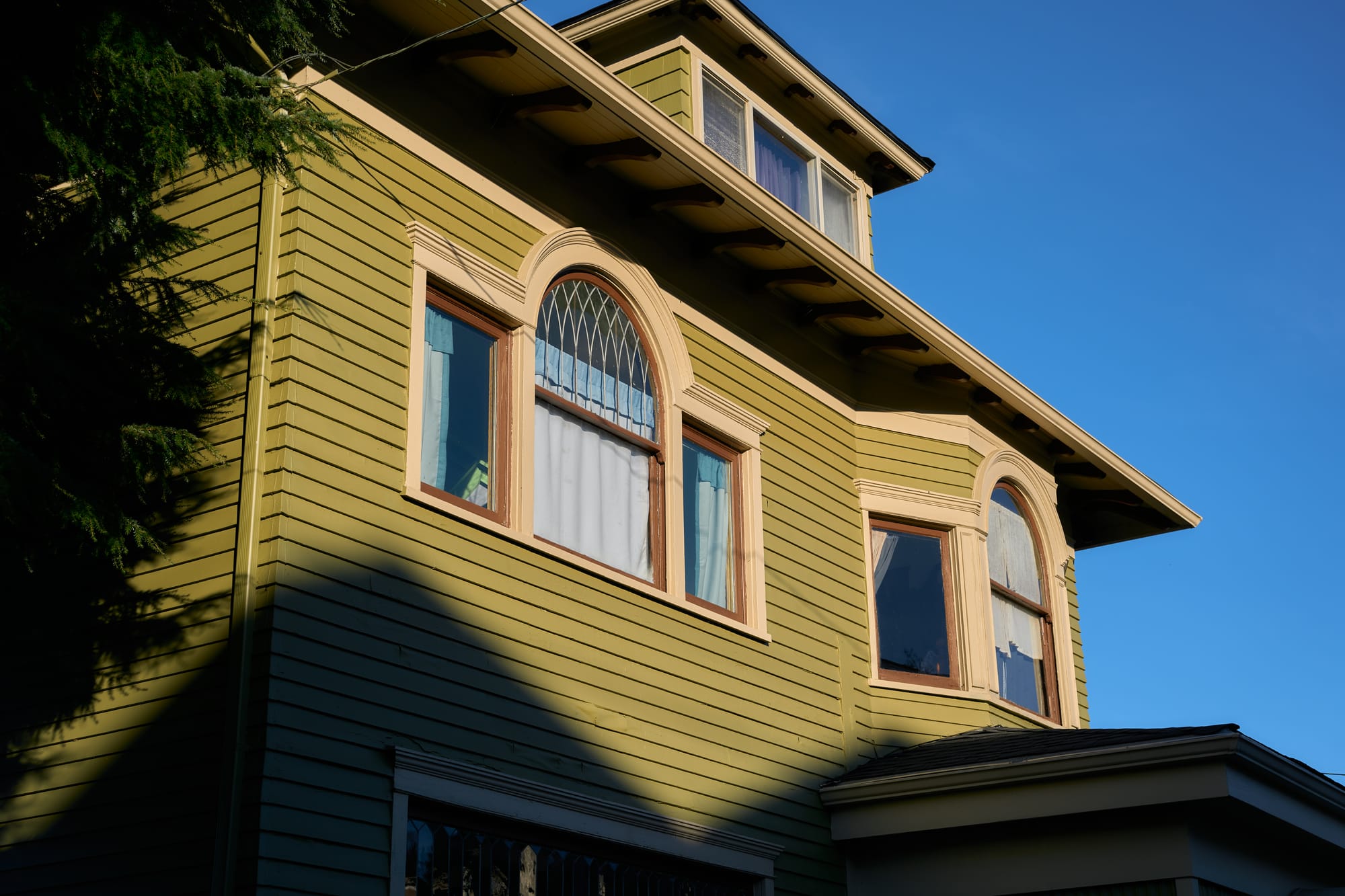
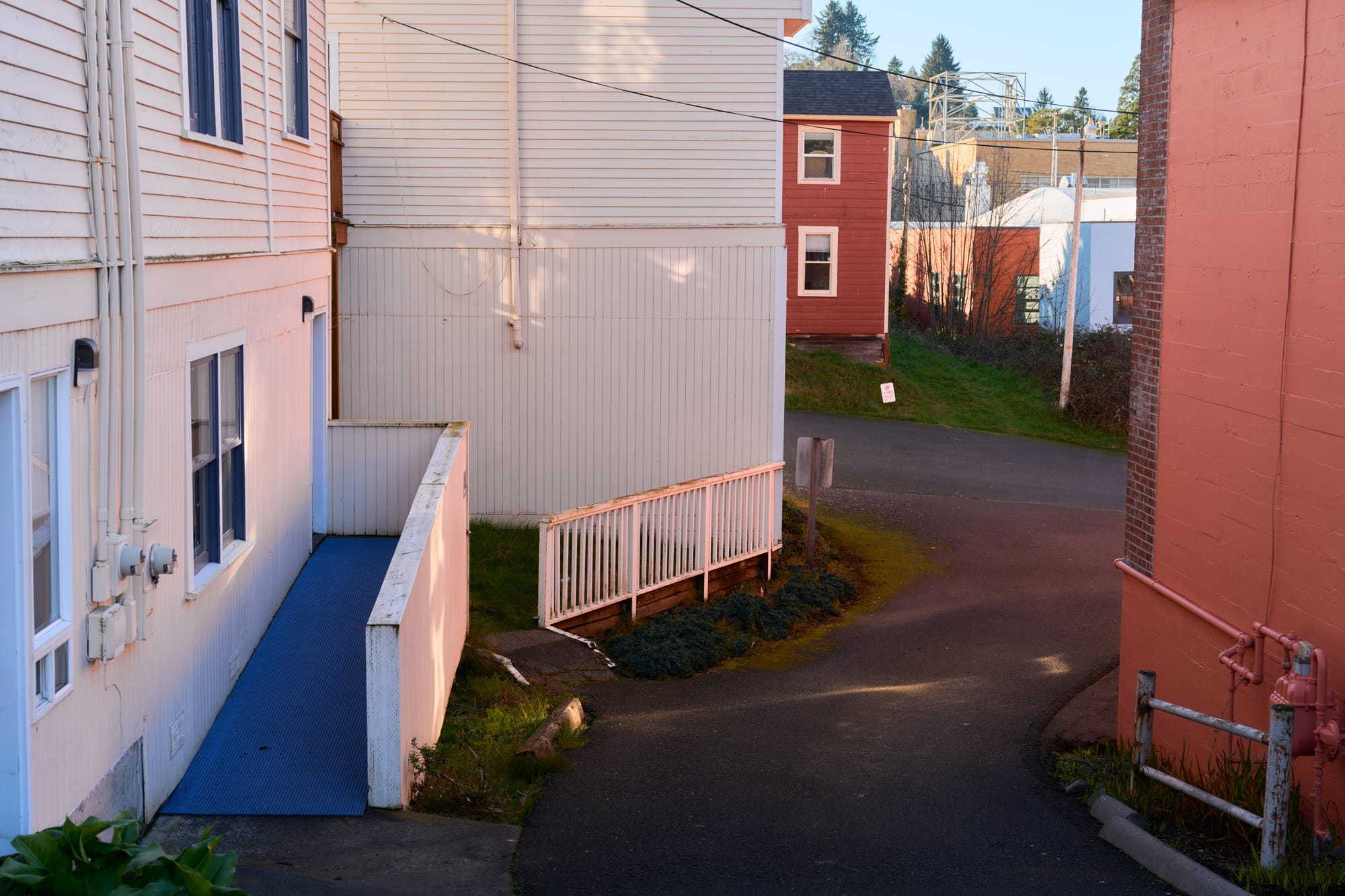
Astoria, like the whole coastline, is filled with storytelling potential. There are endless threads to follow uncovering history and appreciating nature. This may have just been a foundational trip to fill my map with pins, but I feel like I discovered something: the pace of off-season. It's not deserted, but there's room and time. The people that are there strike up conversation. And you have space to take it in.